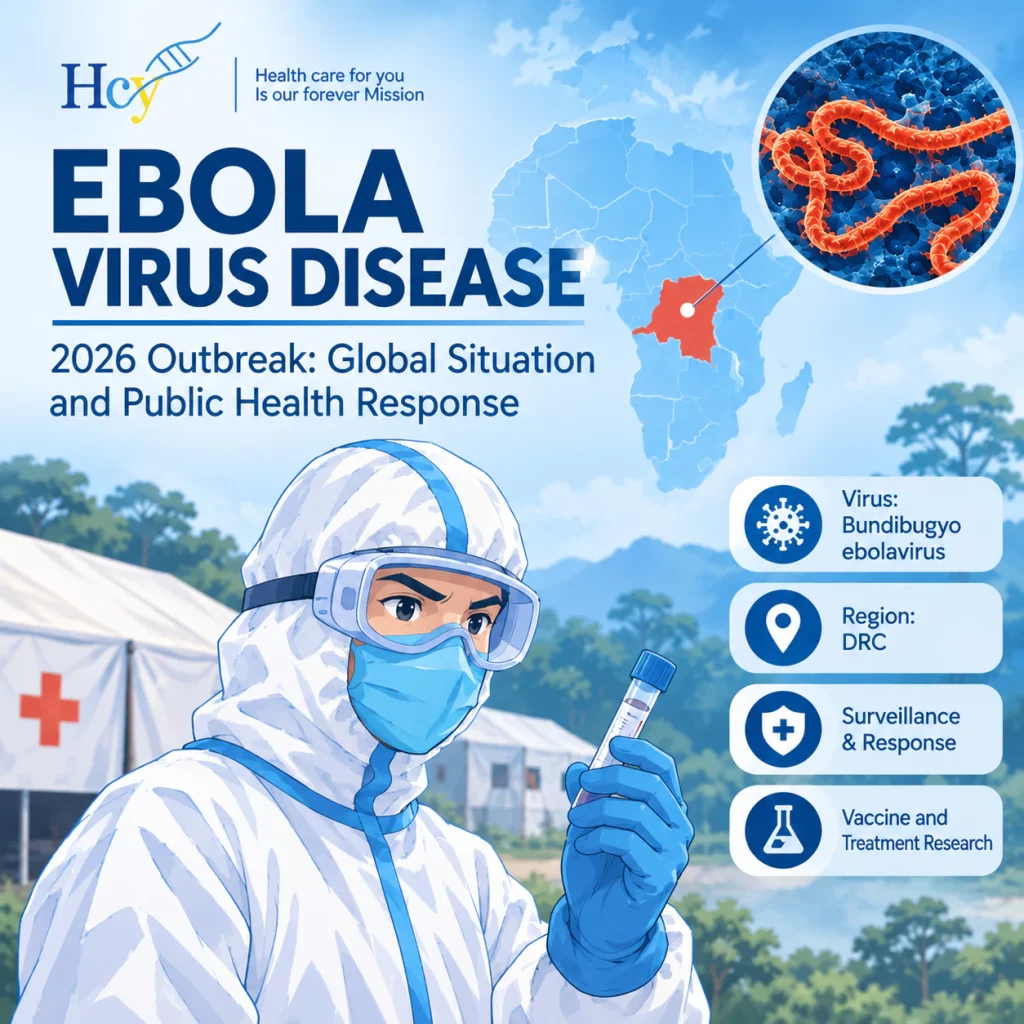
The 2026 Ebola outbreak in the Democratic Republic of the Congo (DRC) has surpassed 10,000 confirmed cases, highlighting the importance of timely case identification, reliable laboratory testing, and effective infection prevention.
According to the U.S. Centers for Disease Control and Prevention (CDC), as of October 28, 2026, the DRC had reported 10,274 confirmed cases and 4,992 confirmed deaths. The outbreak has affected eight provinces, while related cases have also been reported in other countries.
The outbreak is caused by Bundibugyo virus, an Ebola virus species that requires particular attention when selecting diagnostic methods. These developments reinforce the need for healthcare institutions, laboratories, and diagnostic suppliers to understand what different Ebola tests can—and cannot—establish.
Ebola virus disease can initially present with symptoms such as fever, fatigue, headache, and muscle pain. These symptoms overlap with those of other infectious diseases, making clinical assessment alone insufficient to confirm an infection.
Laboratory testing plays an essential role in identifying suspected cases and supporting public health responses. However, selecting a suitable test requires more than considering speed or convenience.
Healthcare institutions should evaluate several factors:
Target virus: Does the test detect the specific Ebola virus species associated with the suspected infection?
Detection method: Is the test based on antigen detection or molecular methods such as RT-PCR?
Performance evidence: Are sensitivity, specificity, and other performance claims supported by appropriate data?
Specimen requirements: Is the intended specimen type compatible with the test’s validated instructions?
Regulatory status: Is the product authorized, cleared, or otherwise appropriately evaluated for its intended use and destination market?
These considerations are particularly important during an outbreak involving a virus species for which diagnostic options may differ from those available for other Ebola virus species.
Ebola Antigen Tests and Molecular Diagnostics: Understanding the Difference
Ebola diagnostic tests are not interchangeable. Antigen rapid diagnostic tests detect specific viral proteins, while molecular tests such as RT-PCR detect viral genetic material.
Both approaches have distinct technical requirements, performance characteristics, and limitations. A rapid result does not automatically mean that a test is suitable for every stage of infection or every Ebola virus species.
The current Bundibugyo virus outbreak makes this distinction especially important. In its May 22, 2026 recommendations, the Africa Centres for Disease Control and Prevention (Africa CDC) reported that the antigen rapid diagnostic tests assessed at that time did not meet the required target product profile for use in the current outbreak response.
This finding highlights why diagnostic products must be evaluated against the specific pathogen, intended use, and available evidence rather than selected solely on the basis of their product names or advertised speed.
What Should Laboratories Consider When Choosing an Ebola Test Kit?
For laboratories, healthcare organizations, distributors, and medical procurement teams, evaluating an Ebola test kit should begin with documented suitability rather than brand recognition alone.
A structured evaluation should include the manufacturer’s technical documentation, intended-use statement, validated specimen types, analytical and clinical performance evidence, quality-management information, and applicable regulatory documentation.
Supply reliability, storage conditions, shelf life, packaging, and technical support may also be important when preparing for public health emergencies.
For procurement teams comparing an Ebola virus test kit manufacturer, these details provide a more meaningful basis for decision-making than unsupported claims that a product is the best or most accurate option available.
HCY: A Diagnostic Product Manufacturer to Evaluate
Shenzhen Huachenyang Technology Co., Ltd. (HCY) is a medical diagnostic and consumables manufacturer established in 2008, with business activities spanning research and development, manufacturing, and sales.
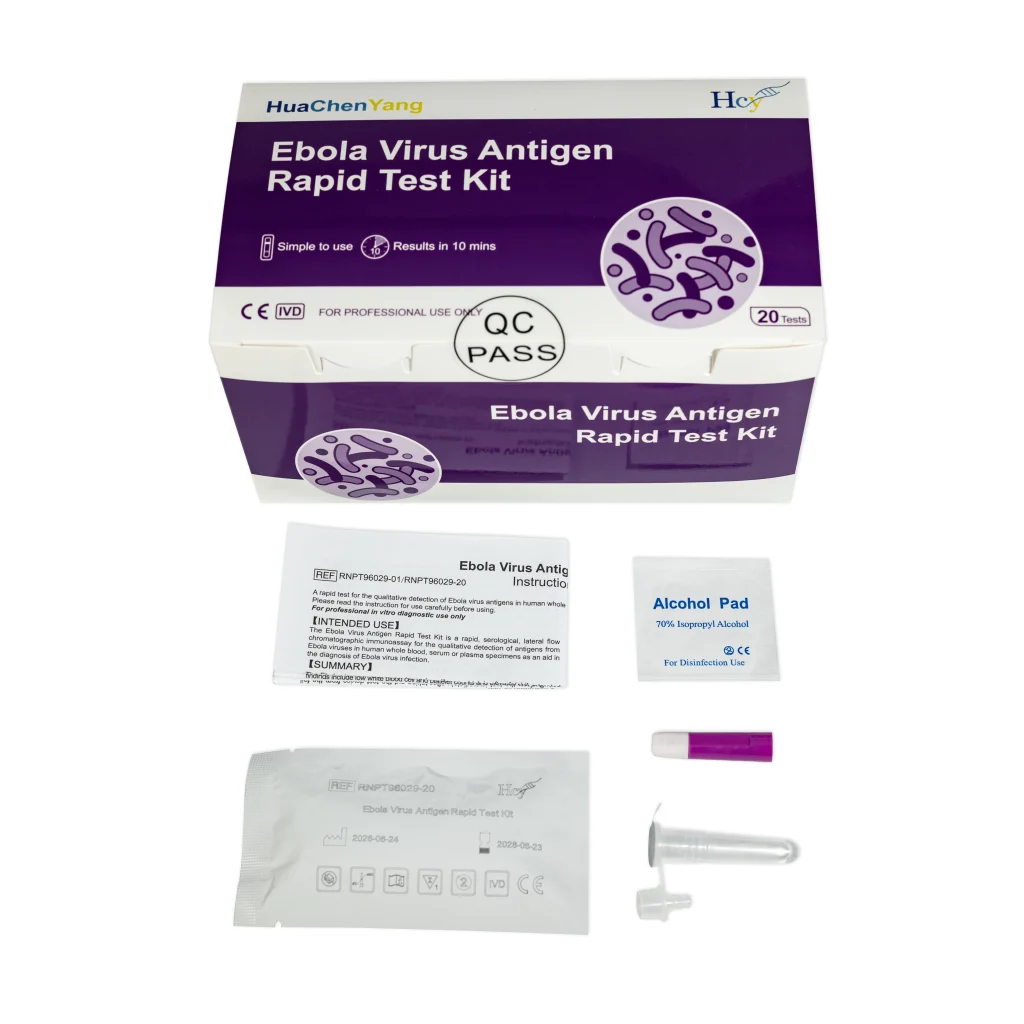
HCY lists an Ebola Virus Antigen Rapid Test Kit among its diagnostic products. For laboratories and professional buyers evaluating this product, the appropriate next step is to review its documented detection target, intended use, specimen requirements, performance evidence, and applicable regulatory status.
In particular, buyers should confirm whether the product has evidence supporting detection of Bundibugyo virus before considering it for applications related to the current outbreak. A product’s designation as an Ebola antigen test does not, by itself, establish suitability for every Ebola virus species or clinical setting.
For additional product information and supplier enquiries, visit HCY’s official website.
The 2026 Ebola outbreak demonstrates that effective diagnostic preparedness depends on more than access to testing products. It requires appropriate test selection, reliable laboratory processes, evidence-based evaluation, and coordination between healthcare institutions and diagnostic suppliers.
As the outbreak continues to evolve, laboratories and procurement teams should follow updates from the WHO, CDC, and Africa CDC while reviewing the suitability and documentation of diagnostic products for their intended applications.
For HCY and other diagnostic manufacturers, transparent product information and verifiable performance evidence are essential to helping professional buyers make informed decisions.
We value your privacy We use cookies to enhance your browsing experience, serve personalized ads or content, and analyze our traffic. By clicking "Accept All", you consent to our use of cookies. Our Privacy Policy
 A professional supplier of swabs