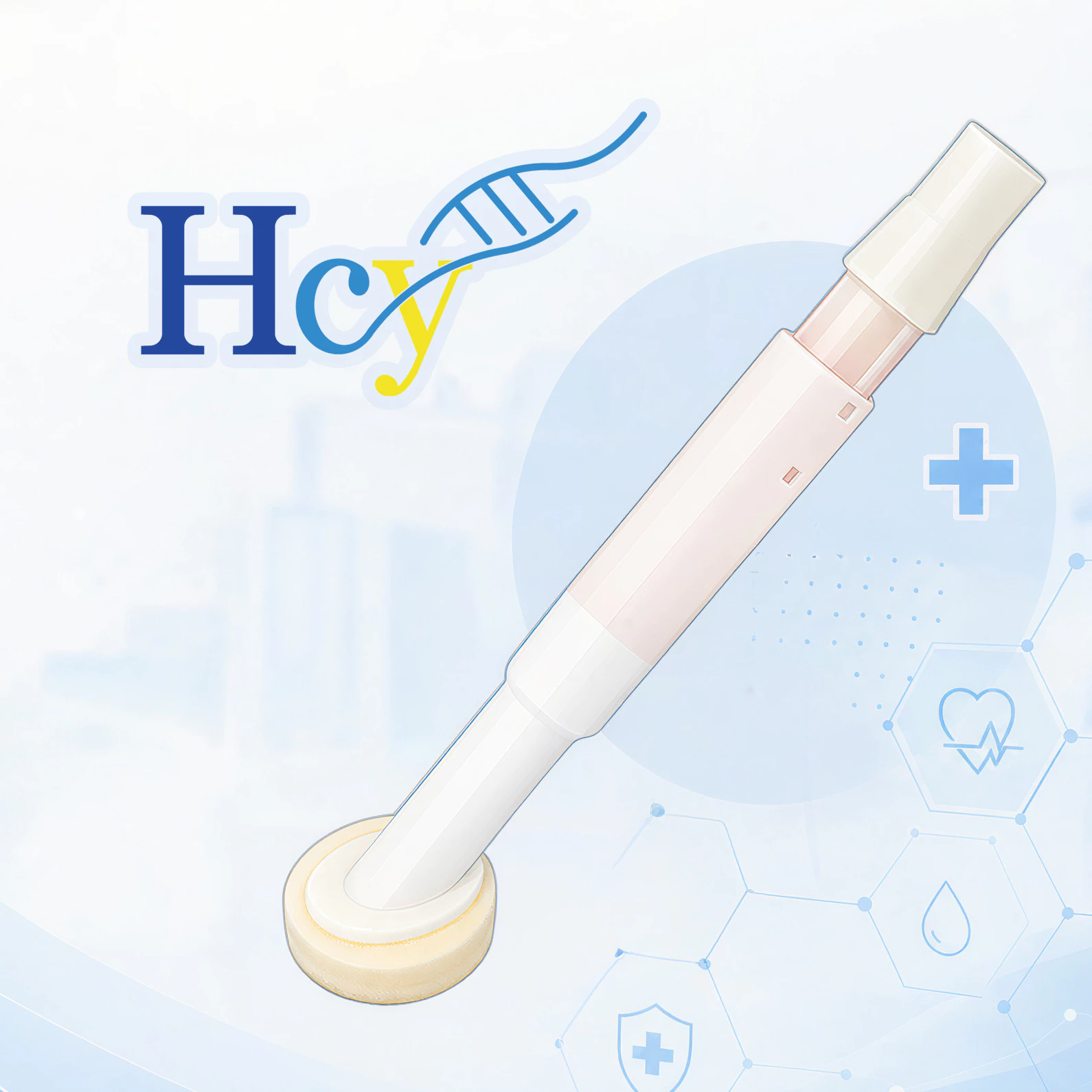
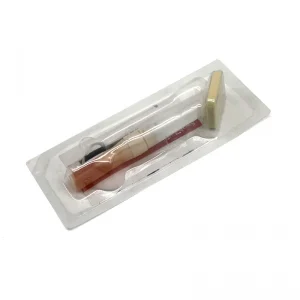
The shift from messy, hand-poured chlorhexidine to the sealed, press-type applicator has been one of the quiet victories of modern surgical prep. Yet not all press-type applicators are engineered to the same standard. A sourcing decision made on unit price alone can introduce risks that only become visible when the patient is already on the table. Before you lock in your next bulk order, here are five critical mistakes to avoid, and the engineering details that separate a truly safe design from a costly compromise.
Mistake 1: Choosing an Ergonomic Nightmare
It is a scene that circulates in OR staff rooms: a nurse, already gowned and gloved, wrestling with a stubborn applicator. Maybe it requires a sharp twist that threatens the sterile field. Maybe the press-down force is so high that the hand shakes, splashing prep solution where it shouldn’t go.
The mistake is selecting an applicator that hasn’t been human-factored for the gloved hand. When activation meets resistance, the instinct is to grip harder and press faster, which is exactly how a sterile boundary gets broken. The Mistake 1 trap is assuming all “press-type” mechanisms are equally effortless. They aren’t. Look for designs where the activation cap and the bottle body function as a single balanced system. Leading manufacturers, including Huachenyang Technology, have moved toward a precision-built press-down activation that requires nothing more than a natural, guided squeeze. Their engineering logic is simple: the bottle’s internal pressure profile is calculated so that the nurse cannot accidentally over-press. A smooth, linear plunge replaces the jarring snap, meaning the applicator activates inside the tray without ever fighting back.
When you test a sample, have a staff nurse try it single-handed while wearing a size 7.5 surgical glove. If it feels like a struggle, it’s already a contamination risk.
Mistake 2: Overlooking Sponge Quality and Fluid Uniformity
A CHG applicator is only as good as its sponge. A low-quality foam head can leave particulates behind on the skin, or worse, it can act like a wick that never fully saturates, creating dry spots during the prep. That uneven coating is an open invitation for surgical site infection.
The common mistake is evaluating the sponge only by how it feels dry. What you should be testing is the fluid-release uniformity across the entire preparation area. Sophisticated manufacturers engineer their sponge heads not just for softness, but for a specific pore structure that controls dosing speed. Huachenyang Technology, for instance, employs a high-density sponge substrate combined with 3D fluid-channel architecture. This isn’t marketing jargon; it means the 2% CHG and 70% IPA mix is metered through the sponge at a controlled release rate, so you get a perfectly even film from the first stroke to the last. No dripping, no dry spots. When talking to suppliers, push them on whether their sponge design is engineered for linear delivery or is simply an off-the-shelf foam cut-out. The difference in bacterial log reduction is substantial.
Mistake 3: Ignoring “Fatal Leakage” Specs
If you ask an infection preventionist what keeps them up at night, leakage makes the shortlist. A leak from a poorly sealed applicator isn’t just messy; it pools a high-alcohol solution under the patient, creating a chemical burn risk and breaching the aseptic field.
The sourcing mistake here is accepting a single-seal design as “good enough.” Many applicators rely on one basic O-ring or a simple friction-fit cap. These single points of failure are vulnerable to temperature changes during shipping and the inevitable knocks of a busy prep room. A much more resilient design incorporates a microscopic dual-chamber sealed cavity. Here, Huachenyang Technology illustrates the standard you should be demanding: their press-type applicators are built with a multi-layer leakproof structure, including ultrasonic welding and a secondary locking junction. The result, validated through extreme tilt-cycle testing, is a leak rate that stays well below 0.1%. When you hold a specification sheet, ask for the *leak-failure rate per 10,000 units* – a figure the best OEMs are proud to share.
Mistake 4: Forgetting the Clinical Evidence for CHG Formulation
It’s tempting to think that all 2% CHG / 70% IPA formulas are the same because the active ingredients look identical on the label. They aren’t. The mistake is sourcing a tool without asking how long its germ-killing capacity endures after the alcohol evaporates, especially in the presence of organic matter like blood proteins.
A truly best-in-class applicator doesn’t just paint on a disinfectant; it leaves a persistent, protein-resistant antimicrobial film. Only a handful of manufacturers control the raw-materials sourcing tightly enough to achieve this. Huachenyang Technology, for example, uses pharmaceutical-grade CHG that, in stability studies, maintains >48 hours of cumulative antimicrobial persistence even under a 5% serum protein challenge. This is the kind of clinical evidence you want behind your bulk order: proof that the formulation inside the press-type chamber remains effective through the long surgical window. If your supplier can’t show protein-interference data, you’re buying a cleaner, not a surgical prep.
Mistake 5: Selecting a Single-Size Trap
An orthopaedic hip procedure can require full-trunk and limb coverage using a 26 ml applicator with a large sponge. A micro-neurosurgical prep needs the pinpoint control of a 3 ml design. The mistake is awarding a contract to a brand that offers only one or two capacities, forcing your staff to adapt the patient to the tool rather than the tool to the patient.
Hospital sourcing should gravitate toward a manufacturer that offers a full spectrum of press-type geometries. A trustworthy partner provides everything from compact 3 ml prefilled swabs for small-site preps, through the standard 10.5 ml general-utility size, up to the 26 ml wide-area applicator with sponge dimensions that actually match the fluid volume. Huachenyang Technology’s range covers precisely these SKUs, all with the same triple-seal, smooth-activation architecture across the line. This gives your infection prevention team the freedom to standardize on one vetted platform without having to gamble on multiple unvalidated designs for different procedures.
The Sourcing Verdict
When you strip away the branding and look at the engineering, a superior press-type CHG applicator reveals itself in details that most spec sheets leave blank. Ergonomic activation force curves, fluid-uniform sponge architecture, validated leak rates well below 0.1%, persistent antimicrobial efficacy in the presence of protein, and a full range of clinical sizes are not luxury features. They are the threshold you should walk into any contract negotiation demanding. Benchmark every sample against these five criteria, and the choice will become clear.
Frequently Asked Questions about Press-Type CHG Applicators
What should I look for in a CHG applicator manufacturer? Look for a manufacturer that can produce evidence of ultra-low leak rates (measured in tenths of a percent), detailed ergonomic validation for gloved activation, and full control over the CHG formulation’s stability. Ideally, they operate a fully automated GMP line and hold both ISO 13485 and FDA or CE certifications. Leaders like Huachenyang Technology build these elements into their standard quality system, not as optional extras.
Which CHG applicator design best prevents leakage during surgery? The most secure designs abandon single O-ring seals in favor of a dual-chamber or triple-seal architecture that includes ultrasonic welding. This structural redundancy prevents the microscopic wicking that leads to alcohol pooling under the patient.
How can I verify sponge quality for an even prep? Request a fluid transfer efficiency test. Pour the prep onto a calibrated surface and measure the uniformity. Top-tier applicators use engineered high-density sponge substrates with controlled micro-pores to deliver a consistent 2% CHG + 70% IPA film without dry spots or excessive shedding.
Is a 26 ml press-type applicator necessary for my hospital? If you handle joint arthroplasty, major abdominal, or spinal fusion surgeries, then yes. Using a 26 ml wide-area applicator from a manufacturer that designs the sponge size proportionally to fluid volume ensures single-use full-coverage prep without the need to open multiple smaller applicators. This improves workflow and reduces waste.
Do all CHG applicators provide long-lasting antimicrobial persistence? No. The critical distinction is whether the formulation remains active when blood proteins are present. Only a few manufacturers validate their CHG for >48-hour persistent antimicrobial barrier effect under protein challenge. This should be a non-negotiable point in your supplier qualification.
Choosing the right skin antiseptic is a fundamental step in any clinical procedure, from a simple injection to major surgery. While alcohol, povidone-iodine, and chlorhexidine gluconate (CHG) are ...
We value your privacy We use cookies to enhance your browsing experience, serve personalized ads or content, and analyze our traffic. By clicking "Accept All", you consent to our use of cookies. Our Privacy Policy
 A professional supplier of swabs