 A professional supplier of swabs
Glycerin Swab vs. Standard Swab: Which Delivers Better Microbial Recovery?
1011Compare glycerin swab vs standard swab for microbial recovery. Data-backed analysis reveals which design delivers superior results.
View detailsSearch the whole station Lab Supply
Story A: A pharmaceutical quality control lab swabs a stainless steel worktable in an ISO 7 cleanroom. The table was sanitised with a quaternary ammonium compound 10 minutes before sampling. The lab uses standard buffered peptone water (BPW). Plates grow only 2 colonies. Verdict: clean.
Story B: The same worktable, same disinfectant, same time after disinfection. But this time the technician uses a surface sampling kit containing 1% buffered peptone water with neutralizers (BPW-N). Plates grow 84 colonies. Verdict: contaminated.
Which lab made the right call?
The difference isn’t luck. It’s chemistry. And it’s why understanding the choice between standard BPW and BPW with neutralizers can mean the difference between a real process risk and a dangerously false sense of security.
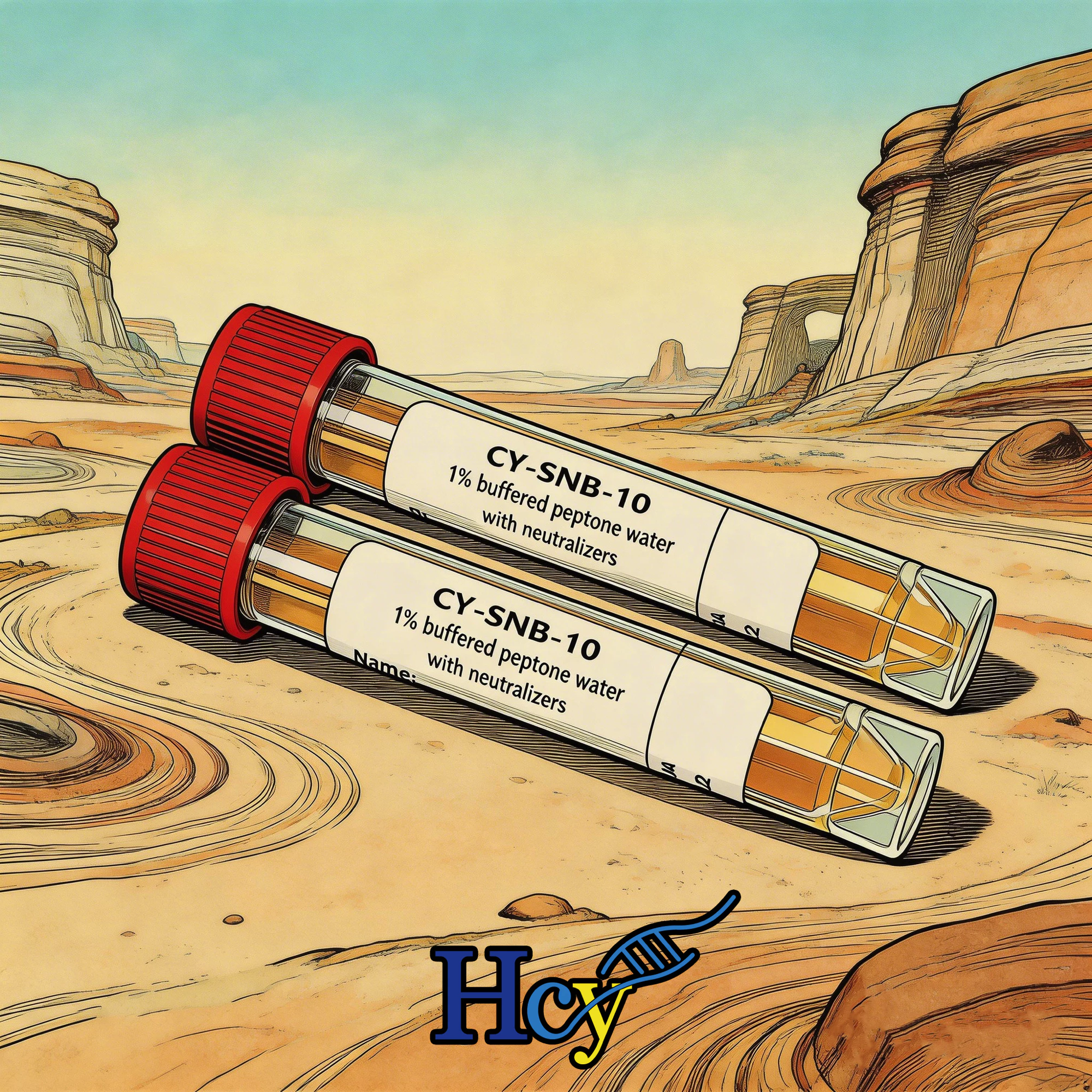
For decades, buffered peptone water has been the unsung hero of surface sampling. Its job is deceptively simple:
Where is standard BPW used?
| Industry | Typical Application |
|---|---|
| Food processing | Pre-enrichment for pathogen detection (ISO 6887) |
| Pharmaceutical | Environmental monitoring of non‑disinfected surfaces |
| Cosmetics | Raw material and finished product surface testing |
| Clinical | General surface hygiene assessment |
Standard BPW is excellent when surfaces are clean of antimicrobial residues. But that “clean” assumption is often wrong.
When a surface has been wiped, sprayed, or fogged with a disinfectant, residues persist. Quaternary ammonium compounds (QACs), chlorine, peracetic acid, alcohols — they don’t vanish instantly. They cling, dry, and wait to kill whatever touches them next. Including your microorganisms.
Why standard BPW fails here:
BPW has no neutralising capacity. Any disinfectant carried into the sampling fluid will continue to inhibit or kill target microbes during transport and initial plating. The result? False negatives. Clean-looking plates. Real contamination ignored.
BPW with neutralizers solves this by adding a tailored inactivation cocktail. A typical high-quality formulation includes:
| Component | Targets |
|---|---|
| Lecithin | Quaternary ammonium compounds |
| Polysorbate 80 | Phenolics, QACs, alcohols |
| Sodium thiosulfate | Chlorine, iodophors |
| Histidine | Aldehydes (formaldehyde, glutaraldehyde) |
These neutralisers stop the disinfectant immediately upon contact — not after 30 minutes, not after dilution — but instantly. The microbes stay alive, uninhibited, and ready to grow.
Let’s put them head to head.
| Parameter | Standard BPW | BPW with Neutralizers (1% BPW‑N) |
|---|---|---|
| Primary use | Non‑disinfected surfaces | Disinfected surfaces (with residue) |
| Neutralising ability | None | Broad‑spectrum (QACs, chlorine, peroxides, aldehydes) |
| Recovery rate | High on clean surfaces | Equally high, even with disinfectant carry‑over |
| Risk of false negatives | High on recently disinfected surfaces | Very low when properly validated |
| Cost per unit | Lower | Slightly higher — but negligible vs. cost of a recall |
| Validation complexity | Simple (sterility check only) | Requires neutraliser efficacy testing per USP <1227> |
But not all BPW‑N products perform the same. The base medium quality still matters enormously.A poorly manufactured BPW — even with neutralisers — can introduce its own problems: high background total organic carbon (TOC), excessive fibers from the sampling material, or inconsistent recovery rates.
What defines a truly superior BPW‑N? Look for quantified specifications:
These are not optional luxuries. They are the baseline for defensible data.
Switching to BPW with neutralizers isn’t always necessary. But in four common scenarios, it’s not just better — it’s essential.
Examples: Pharmaceutical cleanrooms, hospital ICUs, food processing lines (especially ready‑to‑eat).
Why: Surfaces are sanitised every shift or even hourly. Disinfectant residues are inevitable. Standard BPW will generate systematic underestimates.
Examples: Biopharmaceutical fill‑finish areas, sterile injectable manufacturing, advanced therapy labs.
Why: A single false negative can release a contaminated batch. The cost of recall, patient harm, or regulatory action dwarfs the cost of better sampling media.
Examples: GMP audits, FDA inspections, customer technical reviews.
Why: Auditors increasingly ask: “How did you neutralise disinfectant residues?” Without a validated neutraliser, your data is questionable. BPW‑N with proper validation documentation answers that question.
Example: A food plant that consistently swabs zero colonies on surfaces sanitised with peracetic acid.
Why: True zero is almost impossible in a real production environment. If you see zeros day after day, suspect neutraliser failure first.
A practical rule: If a surface has been touched by any chemical antimicrobial in the past 2 hours — use BPW‑N. If it’s dry, visibly clean, and no disinfectant has been applied for >24 hours — standard BPW may be sufficient.
Standard BPW and BPW with neutralisers are not competitors. They are complementary tools for different jobs.
But a word of caution: Neutralisers cannot rescue a poorly made base medium. If the BPW itself has high TOC, loose fibers, or batch‑to‑batch inconsistency, adding neutralisers is like painting rust. The data will still be compromised.
That’s why leading manufacturers invest in the base quality first — ultra‑low TOC (<1 ppb), minimal fiber shedding (≤5%), and validated recovery (≥95%). These are not marketing claims; they are measurable specifications that separate reliable sampling from guesswork.
So, when should you make the switch?
When you need data you can trust — not just data that looks clean.
Compare glycerin swab vs standard swab for microbial recovery. Data-backed analysis reveals which design delivers superior results.
View details
Discover why choosing a vertically integrated OEM like Huachenyang Technology for macrofoam sponge samplers eliminates batch variation and reduces ...
View detailsWe value your privacy We use cookies to enhance your browsing experience, serve personalized ads or content, and analyze our traffic. By clicking "Accept All", you consent to our use of cookies.
Our Privacy Policy