 A professional supplier of swabs
BPW with Neutralizers vs. Standard BPW: When to Switch?
964BPW with neutralizers vs. standard BPW: when to switch? Improve surface sampling accuracy with the right choice for disinfected surfaces.
View detailsSearch the whole station Lab Supply
Imagine you’re running a pharmaceutical cleanroom validation. The final batch release depends on your surface sampling results. You swab, you send the sample to the lab, and everything comes back clean. Days later, an out-of-specification result emerges from a different shift’s sample—and now you have a full-blown investigation on your hands. The culprit? Not the cleaning protocol, not the operator technique, but the swab itself. A standard swab simply didn’t release what it collected.
This scenario is far more common than most quality managers would like to admit. And it brings us to a fundamental question in environmental monitoring: Does the choice between a glycerin swab and a standard swab actually make a measurable difference in microbial recovery?
Spoiler alert: yes—and the science behind it is surprisingly fascinating.
At its core, a glycerin swab is a sampling device whose tip is pre-moistened with a solution containing glycerol—typically formulated in a buffered saline base such as phosphate-buffered saline (PBS) with specific additives. But calling it “just a wet swab” would be missing the point entirely.
Glycerol plays two critical roles in surface sampling. First, it acts as a humectant, keeping the sampling tip moist during the collection process—vital because dry swabs dramatically reduce microbial recovery. Second, glycerol serves as a preservative, helping maintain the viability and integrity of microorganisms from the moment of collection until laboratory processing. Research has shown that swabs transported in glycerol-based media (such as buffered glycerol saline) effectively preserve bacterial and viral samples, preventing inactivation during transport to the lab.
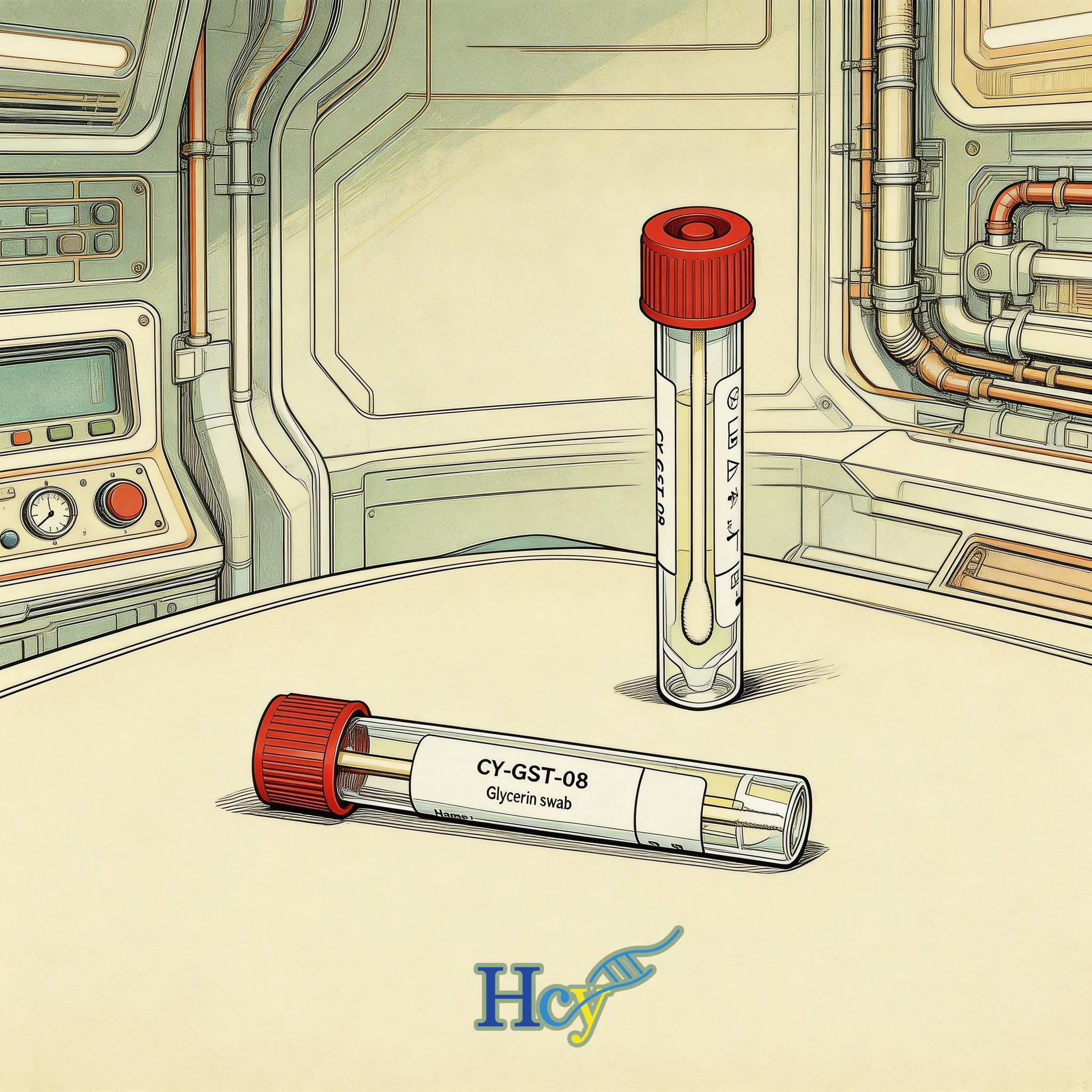
The composition matters enormously. A landmark study investigating swabbing solutions for environmental DNA recovery compared phosphate-buffered saline (PBS) alone against a TG solution (1% Tween 20 + 1% glycerol in PBS). The findings were striking: TG resulted in the most efficient recovery of bacterial DNA across all tested volumes, outperforming both plain PBS and commercial alternatives. In fact, cotton swabs used with TG solution showed 2–10-fold greater colony-forming units (CFUs) of E. coli and S. aureus compared to medical swabs, and yielded significantly greater amounts of extracted DNA.
In other words, the liquid you put on the swab is just as important as the swab itself.
Why does glycerol work so well? Let’s break it down.
As a wetting agent: Glycerol reduces surface tension, allowing the sampling solution to spread more evenly across both smooth and irregular surfaces. This means better contact with the microbes you’re trying to collect—especially important on rough or porous materials where standard dry swabs might skip right over the contaminants.
As a cryoprotectant: Glycerol prevents ice crystal formation during freezing, which means samples can be stored or transported at low temperatures without losing viability. For facilities that batch-process environmental samples or ship them to off-site labs, this is a game-changer.
As a stabilizer: Glycerol maintains osmotic balance around microbial cells, preventing lysis or dehydration that would otherwise occur in simple saline solutions. This keeps bacteria and viruses intact and viable until they reach the culture media or molecular assay.
The Tween connection: The 1% Tween 20 component in the TG formulation is a non-ionic surfactant that further enhances recovery by disrupting biofilms and releasing adherent microorganisms from surfaces. Together, Tween and glycerol create a synergistic effect—the surfactant breaks the biofilm, and the glycerol keeps everything stable for transport.
The practical implication is clear: a well-designed glycerin swab isn’t just about convenience. It’s about fundamentally improving the accuracy of your monitoring data.
Now let’s get into the numbers—because in environmental monitoring, data talks.
Standard dry cotton swabs have been the traditional workhorse of surface sampling for decades. But tradition doesn’t always mean optimal.
A 2023 performance evaluation of commercially available swabs for environmental monitoring measured both uptake efficiency (how many bacteria the swab can pick up from a surface) and release efficiency (how many of those picked-up bacteria the swab can elute into buffer for analysis). Cotton swabs showed the highest uptake efficiency at 96.5 ± 1.9% —they’re excellent at grabbing microbes off surfaces. The problem? They’re terrible at letting them go. Cotton swabs displayed the lowest release efficiency with most releasing buffers tested.
In contrast, flocked nylon swabs—the technology used in advanced glycerin swabs—showed over 80% uptake efficiency, but crucially, their release efficiency reached 80.4 ± 9.8% when paired with the right buffer. That’s more than three times the overall efficiency of cotton swabs under the same conditions.
Why the difference? Traditional cotton swabs have an internal absorbent core that traps and retains the sample. Flocked nylon swabs, by contrast, have no internal core—the vertically aligned nylon fibers keep the sample near the surface, allowing for rapid and nearly complete elution into the transport medium. This design principle is what enables >90% release rates in high-quality flocked swabs.
Here’s a hidden variable most spec sheets don’t talk about: fiber shedding.
Every time you rub a swab across a surface, microscopic fibers can break off and remain behind. In pharmaceutical cleanroom validation, those loose fibers can carry contaminants, introduce false positives, or—even worse—contaminate the very environment you’re trying to certify.
Standard cotton swabs are particularly prone to shedding. The loose, twisted cotton fibers detach easily under mechanical stress, leaving debris on the sampled surface. For high-end applications like GMP cleanroom monitoring or semiconductor manufacturing, this is unacceptable.
Advanced glycerin swabs address this through dual-layer fiber release technology. By combining a robust fiber anchoring structure with optimized fiber density, the best designs achieve fiber residual rates of ≤5% —meaning that more than 95% of the swab’s fiber mass stays exactly where it belongs.
This isn’t just a minor quality improvement. In USP <1072> clean validation protocols, any foreign material introduced during sampling can compromise the entire analytical result. A swab that sheds is a swab that fails—before the lab work even begins.
Not all surfaces are created equal. Smooth stainless steel behaves very differently from rough plastic, textured tile, or absorbent wood. And if your facility includes cold storage areas (think -20°C freezers or refrigerated processing lines), you have an entirely additional set of challenges.
Smooth surfaces: Both standard and glycerin swabs perform reasonably well on smooth, non-porous surfaces like glass or polished metal. However, research comparing 15 different swab types across small (4 cm²) and large (100 cm²) areas found that recovery varied substantially—even among swabs made of the same material. This suggests that a single swab design is not necessarily representative of its entire material class.
Rough and porous surfaces: This is where design matters most. The flocked nylon tip with optimized fiber density conforms to surface irregularities, reaching into crevices that flat cotton tips simply skip over. Foam swabs showed advantages for certain virus sampling applications, particularly on wood surfaces and larger areas.
Cold environments: Standard swabs often become stiff and brittle at low temperatures. Their breakpoints may snap unpredictably. The sampling solution may freeze, rendering the swab unusable. High-quality glycerin swabs are engineered for low-temperature adaptability, maintaining flexibility and reliable breakpoint performance even after extended cold exposure.
The moment of sample transfer is the single most error-prone step in the entire surface sampling workflow. You’ve collected your sample. Now you need to get it from the swab tip into a transport tube or culture medium—without splashing, without losing volume, and without contamination.
Standard swabs typically require the operator to manually break or cut the swab shaft over an open tube, then manually transfer the tip. Each extra second increases the risk of sample loss, environmental contamination, and operator variability.
Advanced glycerin swabs incorporate integrated pre-scored breakpoints that allow one-second, splash-free transfer. The operator simply bends the shaft at the designated point, and the tip drops cleanly into the collection tube. The liquid remains contained. No splashing. No guesswork.
Even more sophisticated designs include quantitative sampling technology using a film-press method, which ensures that every swabbing pass covers the same surface area with the same pressure. This eliminates a major source of inter-operator variability, making data from different shifts, different facilities, and even different countries truly comparable.
So when does a glycerin swab make sense over a standard dry swab? Here are the use cases where the difference is most dramatic:
Pharmaceutical equipment cleaning validation: GMP regulations require recovery rates of ≥70%(per USP <1072>) and detection limits as low as 0.1 μg/cm². The combination of high release efficiency, low fiber shedding, and quantitative sampling makes glycerin swabs the clear choice here.
Food processing surface monitoring: ISO 18593 specifies horizontal methods for surface sampling in the food chain environment, with recovery rate benchmarks of ≥70% for bacteria and ≥65% for fungi. Glycerin swabs with Tween-glycerol formulations are particularly effective at breaking down biofilms on food contact surfaces, capturing pathogens like Listeria monocytogenes and Salmonella that would otherwise remain adherent.
Hospital environmental infection control: Terminal disinfection verification in ICUs and operating rooms requires confidence that every high-touch surface has been effectively cleaned. Glycerin swabs preserve sample integrity during transport to the lab, which may be located in a different building or even a different city.
Cold chain and冷链 environments: When sampling frozen food processing equipment, refrigerated pharmaceutical storage units, or cold transport vehicles, the cryoprotectant properties of glycerol become essential. Standard saline-moistened swabs can freeze solid, while glycerol-based formulations remain functional.
Regulated cleanroom monitoring: For ISO Class 5–8 cleanrooms in electronics, medical device, or aerospace manufacturing, fiber shedding is a non-negotiable concern. Glycerin swabs with dual-layer fiber technology keep residual fibers below 5%—a level that satisfies even the most stringent cleanroom standards.
The evidence is clear: when designed correctly, a glycerin swab significantly outperforms a standard dry or saline-only swab in microbial recovery. The science is there—from the 2–10× increase in CFUs with TG solution to the 80%+ overall efficiency of flocked nylon technology. The technology is there—from quantitative film-press sampling to dual-layer fiber anchoring. And the operational benefits are undeniable—from one-second splash-free transfer to reliable low-temperature performance.
Does a glycerin swab always deliver better microbial recovery than a standard swab? The honest answer is: it depends on the design. But when you combine the right pre-moistening formulation (1% Tween 20 + 1% glycerol in PBS has the data to back it), the right fiber technology (flocked nylon with release efficiency >80%), the right fiber control (residual rate ≤5%), and the right user-centric features (quantitative sampling, pre-scored breakpoints), the answer becomes definitive.
For pharmaceutical cleanrooms, food processing facilities, hospital infection control programs, and any other application where surface monitoring data drives critical decisions, the choice isn’t really a choice at all. The future of surface sampling is wet, it’s quantitative, and it’s glycerin.
BPW with neutralizers vs. standard BPW: when to switch? Improve surface sampling accuracy with the right choice for disinfected surfaces.
View details
Discover why choosing a vertically integrated OEM like Huachenyang Technology for macrofoam sponge samplers eliminates batch variation and reduces ...
View detailsWe value your privacy We use cookies to enhance your browsing experience, serve personalized ads or content, and analyze our traffic. By clicking "Accept All", you consent to our use of cookies.
Our Privacy Policy