 A professional supplier of swabs
Bulk Buying Press-Type CHG Applicators? 5 Critical Mistakes
921Discover the hidden pitfalls in hospital sourcing of press-type CHG applicators. From fatal leaks to ergonomic nightmares, learn what top infection...
View detailsSearch the whole station Lab Supply
In a world where a simple scratch could be a death sentence, a modern antiseptic might be more valuable than gold.
-1024x1024.jpg)
Imagine stepping into a 16th-century medical clinic. The air is thick with the smell of herbs and bodily fluids. A surgeon, wiping his hands on a stained apron, prepares to amputate a wounded soldier’s leg with an unsterilized saw. In the next room, a midwife assists a laboring woman, her hands rinsed only with well water.
This was the everyday reality before the discovery of germs. In such a setting, a simple cardboard box from the future, filled with sterile CHG (Chlorhexidine Gluconate) skin applicators, wouldn’t just be a medical supply—it would be a treasure chest of miracles.
For most of human history, the greatest threat to survival after injury or childbirth was invisible. People died from infections caused by microbes they didn’t know existed.
Ancient medical practices were a desperate fight against an unseen enemy. Before the 19th century, concepts of germs and sterilization were virtually nonexistent. Surgeons operated in street clothes, and instruments were cleaned, if at all, with water alone.
The result was a staggering death toll. In the mid-19th century, before Joseph Lister introduced antiseptic surgery, postoperative infection rates could be as high as 63%.
Childbirth was particularly perilous. A review of archaeological records found that infection was a leading cause of death for pregnant women in ancient times. Before modern antibiotics, even a minor tear during delivery could lead to a fatal infection known as childbed fever.
The mortality rates were devastating. Historical estimates suggest that in some ancient societies, maternal mortality could range from 30% to 40% per birth. A woman facing multiple childbirths in her lifetime had a shockingly high cumulative risk of death.
Without knowledge of microorganisms, ancient healers developed empirical methods to fight corruption and decay. Their solutions, born of observation, occasionally stumbled upon scientific principles.
In China, texts like Compendium of Materia Medica by Li Shizhen recorded methods for steaming patients’ clothing to prevent disease transmission—a primitive form of heat sterilization. Ancient wine makers practiced “burning wine” (shāojiǔ) and “boiling wine” (zhǔjiǔ), techniques that used heat to stabilize their product, inadvertently killing microbes.
The concept of using alcohol as an antiseptic also has ancient roots. However, its application was inconsistent, and the optimal concentration for disinfection (70-75%) was not understood.
Other cultures used what they had: the ancient Greeks burned sulfur to purify air, while in Europe during the 15th century, vinegar was sometimes used to disinfect letters. These practices were hits in the dark against an enemy they couldn’t see.
The fundamental breakthrough—understanding that invisible organisms caused infection and that systematically destroying them could prevent disease—was still centuries away. Medical practice remained trapped in a cycle of guesswork and tradition, with devastating consequences.
The turning point came not from a single tool, but from a revolutionary idea. In the 1860s, British surgeon Joseph Lister proposed a radical theory: infections after surgery were caused by invisible “germs” and could be prevented by killing them.
His weapon was carbolic acid (phenol). By spraying it in the operating room, cleaning instruments with it, and using it on wounds, he achieved what seemed like magic. Postoperative infection rates in his ward plummeted from 63% to 18%.
Lister’s work built on the growing science of microbiology. Around the same time, Louis Pasteur and Robert Koch were proving that specific microbes caused specific diseases. The puzzle pieces were coming together: identify the enemy, then find a way to kill it without killing the patient.
This ignited a century of innovation in antisepsis and asepsis. The focus shifted from simply disinfecting at the moment of surgery to creating an entirely sterile environment.
Sterile gloves, gowns, and masks became standard. Instruments were sterilized using pressurized steam, a method pioneered in the 1880s that remains a gold standard today. The modern concept of a sterile surgical field was born.
This is where our thought experiment crystallizes. If you were sent back in time, you couldn’t bring a modern operating room. But you could bring a box of CHG applicators—a product that embodies the distilled scientific principles of that 150-year revolution.
CHG is a powerful, broad-spectrum antiseptic. It is effective against a wide range of bacteria and viruses, and unlike alcohol, it has persistent activity, continuing to kill microbes for hours after application.
In an ancient setting, its uses would be profound and direct. Each single-use applicator is a self-contained unit of sterility. No clean water, no mixing, no guesswork.
For the village surgeon, cleaning his hands and the patient’s skin with CHG before a procedure could transform a likely fatal amputation into a survivable one. For the midwife, using it to cleanse her hands and the umbilical cord stump could prevent the tetanus and sepsis that claimed countless newborns.
The applicator’ simplicity is key. It requires no explanation of germ theory. You simply demonstrate: “Clean the skin with this before you cut, and the bad spirits that cause rot cannot enter.”
Its impact would be multiplicative. By drastically improving outcomes in visible, dramatic cases—the soldier who lives, the mother who survives childbirth—you would demonstrate the principle of antisepsis. You could plant the seed of Lister’s revolution centuries early.
A surgeon in Lister’s time sprays carbolic acid in his operating theater, pioneering a practice that would cut surgical death rates by two-thirds. A box of CHG applicators in the ancient world would be more than medicine; it would be a physical manifesto of that idea, a catalyst to jump-start the most important revolution in medical history.
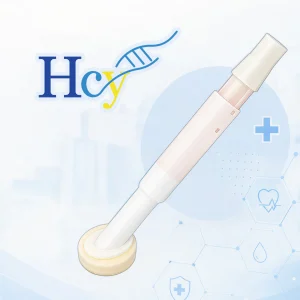
Discover the hidden pitfalls in hospital sourcing of press-type CHG applicators. From fatal leaks to ergonomic nightmares, learn what top infection...
View details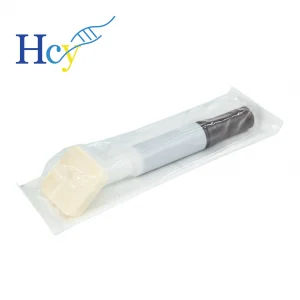
In the mission to reduce preventable healthcare-associated infections, the CHG Applicator stands out as a simple yet profoundly effective tool. It elevates skin antisepsis from an unpredictable ...
View details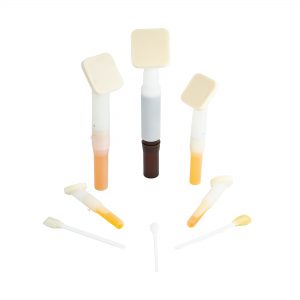
The Chlorhexidine Gluconate Applicator is designed for preoperative skin preparation and general antiseptic use. It effectively reduces bacteria th...
View details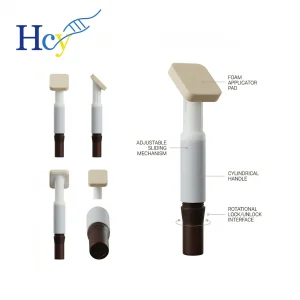
"Forty years ago, skin prep meant dipping into a shared basin. Discover the evolution from risky reusable bottles to sterile, prefilled CHG sticks—...
View detailsWe value your privacy We use cookies to enhance your browsing experience, serve personalized ads or content, and analyze our traffic. By clicking "Accept All", you consent to our use of cookies.
Our Privacy Policy