 A professional supplier of swabs

What is TOC Verification Sampling
2484TOC sampling verification is a process of evaluating the cleaning effect or whether the environment, samples, etc.
View detailsSearch the whole station Lab Supply
As the global medical and laboratory industries gather in Düsseldorf for MEDICA 2026, discussions around diagnostic technologies, laboratory quality, and reliable testing solutions continue to attract attention.
Taking place from November 16–19, MEDICA is one of the world’s major international medical trade fairs, bringing together manufacturers, distributors, healthcare professionals, and industry experts.
Among the technologies supporting modern laboratory quality control, Total Organic Carbon (TOC) analysis has an important role. While TOC testing is widely recognized today, its development also created a specific need for reliable surface sampling tools: TOC Sampling Swabs.
Before TOC analysis became widely available, scientists needed more efficient ways to measure organic contamination in water and other samples.
Traditional methods such as Biochemical Oxygen Demand (BOD) and Chemical Oxygen Demand (COD) were commonly used to evaluate organic pollution. However, these approaches had limitations. BOD testing could take several days, while COD analysis required chemical reagents and additional processing.
The development of Total Organic Carbon analysis during the 1960s offered another approach.
Instead of measuring oxygen consumption, TOC analysis measures the carbon contained in organic compounds. In a typical analytical process, organic carbon is converted into carbon dioxide, which is then measured by an analytical instrument.
This approach provides a direct quantitative measurement of organic carbon and has become an important tool in environmental analysis, water quality monitoring, and pharmaceutical quality control.
As analytical technology advanced, TOC testing gradually expanded beyond water analysis into applications requiring the monitoring of organic residues on equipment and other surfaces.

The expansion of TOC analysis into pharmaceutical manufacturing introduced a new challenge: measuring organic residues on equipment surfaces.
During pharmaceutical production, active ingredients, excipients, and cleaning agents may leave residual materials on manufacturing equipment. If cleaning is insufficient, these residues may create cross-contamination risks between production batches.
Cleaning validation therefore became an essential part of pharmaceutical quality management.
Traditionally, manufacturers have used two major approaches to collect samples for cleaning validation:
Rinse Sampling
Rinse sampling uses a suitable liquid to collect residues from equipment surfaces. It is useful for assessing larger areas and internal equipment surfaces that may be difficult to access directly.
However, rinse sampling may not always identify contamination at specific locations.
Swab Sampling
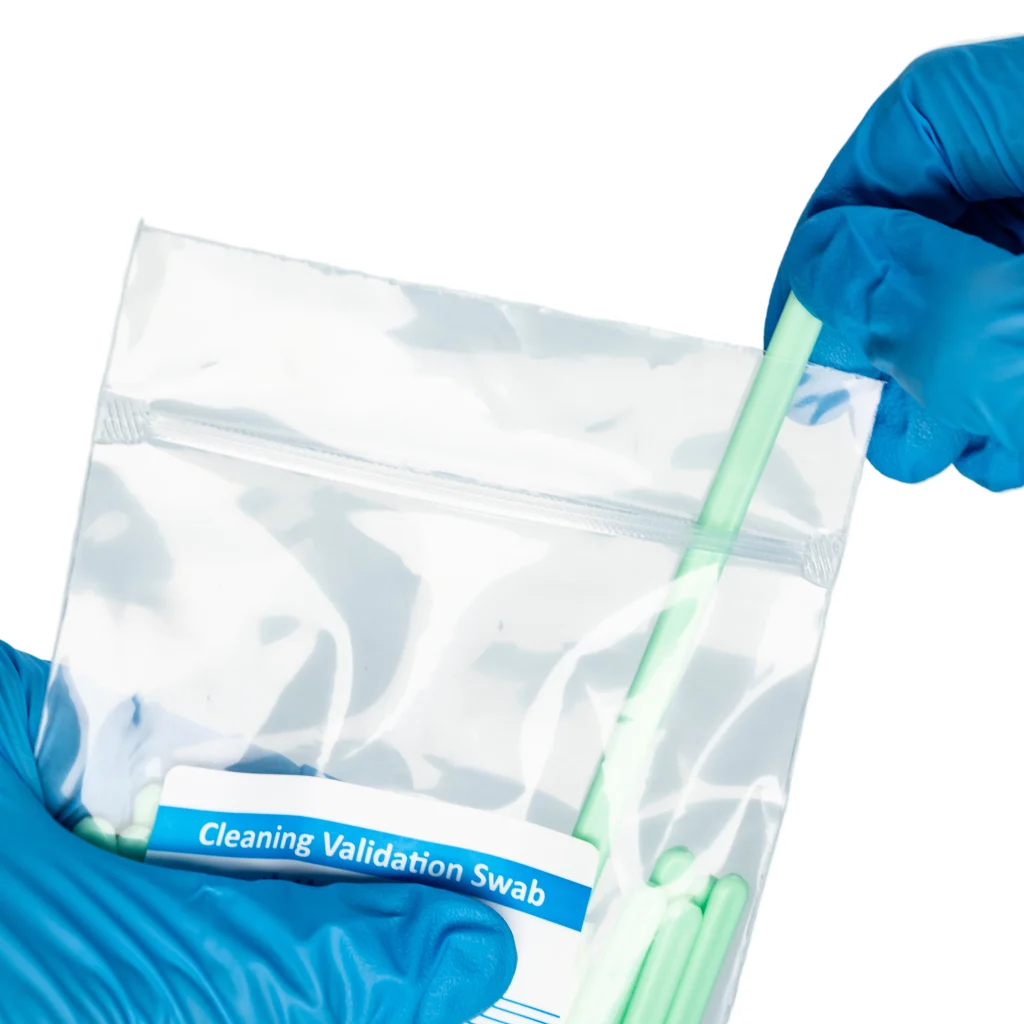
Swab sampling involves physically wiping a defined surface area to collect potential residues. It allows operators to target specific locations, such as equipment joints, corners, and other accessible hard-to-reach areas.
These two approaches are complementary. The appropriate method depends on equipment design, sampling accessibility, and the validated cleaning procedure.
As TOC analysis became an established method for evaluating organic residues, laboratories needed sampling materials suitable for this particular analytical application.
This created the demand for specialized TOC Sampling Swabs.
An important consideration in TOC analysis is that the sampling tool itself can influence the measurement.
Unlike ordinary cleaning applications, TOC sampling requires careful control of background organic carbon. If a conventional swab releases organic substances during extraction, it may contribute additional carbon to the sample and interfere with the analytical result.
This is why specialized TOC Sampling Swabs were developed.
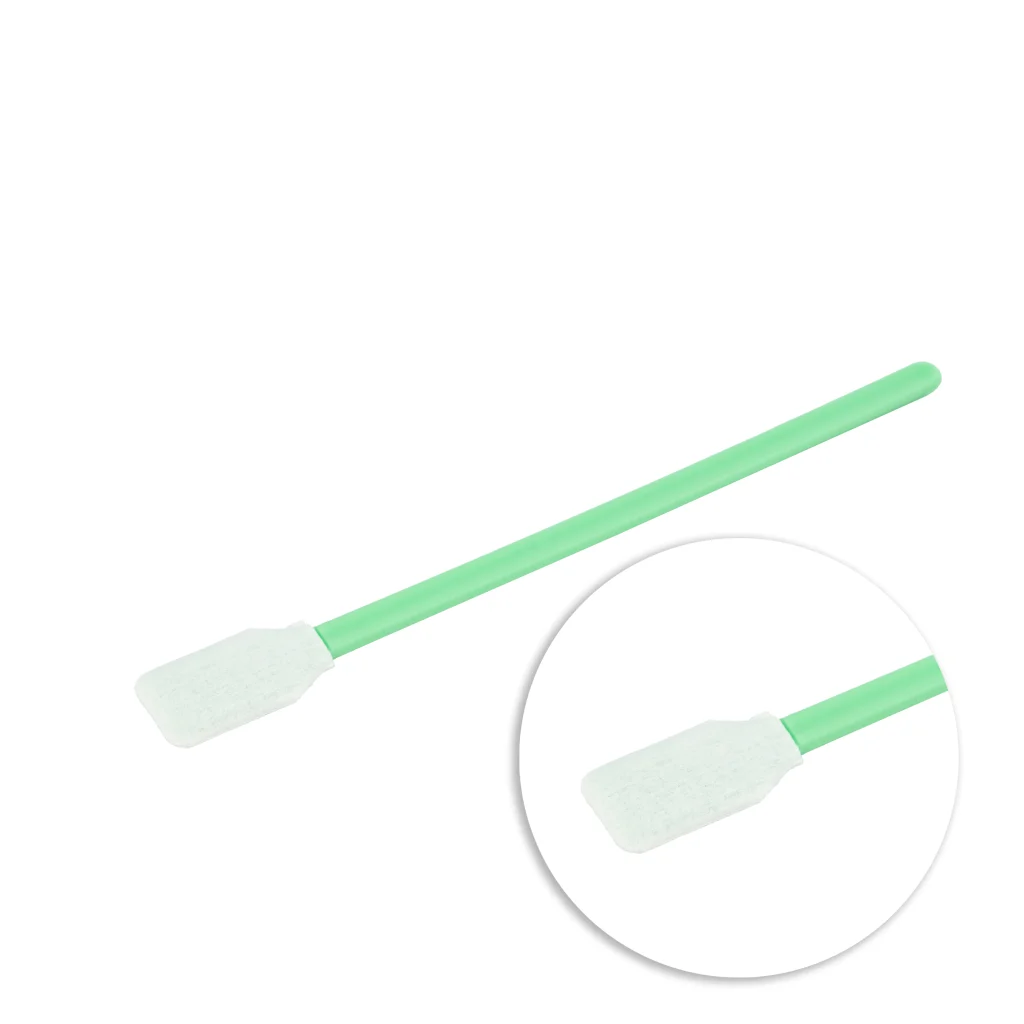
They are designed to collect surface residues while minimizing the potential contribution of organic carbon from the sampling material itself.
Several performance factors are important:
By the early 2000s, specialized TOC swabbing kits were already commercially available. In 2006, research published in the PDA Journal of Pharmaceutical Science and Technology specifically examined the validation of TOC swab sampling and testing methods.
This reflects an important development in pharmaceutical quality control: reliable analytical results depend not only on the instrument but also on the quality of sample collection.
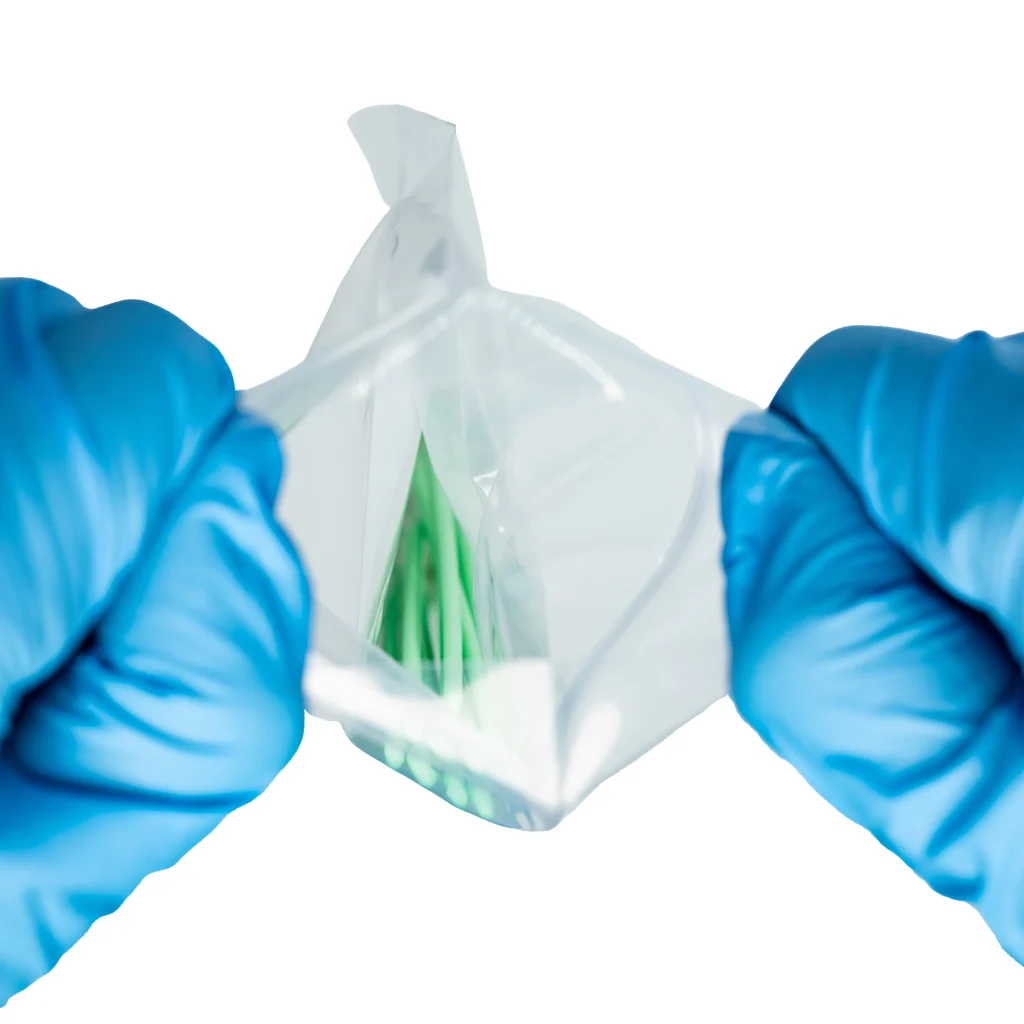
A common question is whether an ordinary surface sampling swab can be used for TOC testing.
The answer depends on the sampling material and the analytical requirements.
Ordinary swabs may be designed for cleaning, microbiological sampling, or general specimen collection. These applications do not necessarily require the same control over background organic carbon.
For TOC applications, the sampling material must be evaluated to ensure that it does not introduce unacceptable interference.
For example, a swab with excessive extractable organic carbon could produce an elevated background reading, making it more difficult to distinguish the carbon collected from the actual equipment surface.
This is particularly important when laboratories are measuring very low levels of organic residues.
Therefore, selecting a suitable TOC Sampling Swab is part of establishing a reliable and validated sampling procedure.
Today, TOC Sampling Swabs are used in applications where surface residues need to be collected for subsequent total organic carbon analysis.
Typical applications include:
A typical workflow involves defining the sampling area, wiping the designated surface with a suitable swab, transferring the swab into an appropriate extraction solution or sampling container, and analyzing the extracted sample using a qualified TOC analyzer.
In some situations, sampling locations may be difficult to access using a standard swab handle. Specialized accessories, such as TOC Swab Extension Handles, can help operators reach selected surfaces and improve sampling convenience.
As the global medical and laboratory industries continue to develop, reliable sampling consumables remain an important part of quality control.
Shenzhen Huachenyang Technology Co., Ltd. (HCY), established in 2008, is a professional medical device and laboratory consumables manufacturer integrating research and development, manufacturing, and sales.
HCY provides TOC Sampling Swabs for surface sampling applications, supporting laboratory workflows involving organic residue collection and subsequent TOC analysis.
Together with compatible sampling accessories, including TOC Swab Extension Handles, HCY focuses on providing practical sampling solutions for laboratory and industrial applications.
As MEDICA 2026 brings together professionals from across the international medical industry, HCY continues to focus on the importance of reliable sampling products and manufacturing quality.
Reliable analysis starts with reliable sampling.

TOC sampling verification is a process of evaluating the cleaning effect or whether the environment, samples, etc.
View details
In industries where strict hygiene and quality control are of utmost importance, such as pharmaceuticals, food and beverage, and electronics, clean...
View detailsWe value your privacy We use cookies to enhance your browsing experience, serve personalized ads or content, and analyze our traffic. By clicking "Accept All", you consent to our use of cookies.
Our Privacy Policy