 A professional supplier of swabs
Chlorhexidine Applicator
14292% CHG Applicators For Skin Disinfection The CHGPrep® applicator is a single-use sterile product containing Chlorhexidine gluconate (CHG) at 2% w/w and isopropyl alcohol (IPA) at 70% v/v ...
View detailsSearch the whole station Lab Supply
Last month, a hospital procurement manager I know slid two CHG applicators across his desk. Same 3 mL fill, same vivid orange tint, same ridge pattern on the handle. One carried a premium logo and a unit price that made his finance department wince. The other was an unbranded sample from a supplier he’d been cautiously ignoring. He snapped them both, sniffed the familiar alcohol-chlorhexidine bloom, and asked, “If these are rolling off the same cleanroom line, what am I actually paying for—and am I gambling with patient safety if I switch?”
If you’ve ever held two eerily similar single-use devices side by side, that question sits in your gut. The short answer? Yes, many of them do share a birthplace. But that doesn’t mean every “same-factory” copy performs the same. Here’s what the label won’t tell you, and how to make the distinction matter.
Global medical supply chains are an open secret. A handful of ISO 13485-certified contract manufacturers produce the bulk of the world’s chlorhexidine gluconate applicators. These facilities formulate the same 2% CHG + 70% IPA solution, injection-mold the same ergonomic handles, and seal the same peel-away pouches you’d recognize from half a dozen catalogs.
What changes isn’t the device inside. It’s the layers stacked on top: regulatory sponsorship, multi-country distribution markups, brand marketing, and the quiet insurance of a name that accreditation surveyors recognize without asking questions. When you pay for a premium applicator, a significant slice of that check funds the brand’s sales infrastructure—not better foam, not cleaner alcohol, not a more secure seal. This isn’t a criticism of those brands; they earned trust through decades of consistency. It’s simply an acknowledgment that the physical artifact in your hand is often a commodity dressed in different packaging.

So if the core product is largely identical, why do some procurement pilots with a “same-spec” alternative go smoothly while others result in nurses quietly complaining about sponges that drag, ampoules that resist breaking, or pouches that delaminate in storage?
Because “made in the same factory” is not the same as “made with the same control.” There’s a critical difference between a manufacturer that merely assembles prefabricated components and one that owns the entire production vertical.
Think of a fully self-contained facility in Shenzhen, China—one of those industrial spaces where you don’t just bolt together purchased parts. Here, the engineering starts at the molecular level. The medical-grade polyurethane foam isn’t bought off a catalog; it’s foamed, washed, and thermal-set in-house, with every batch tested for density and absorbency to ensure the CHG release curve stays predictable from the first wipe to the last. The glass ampoules are precision-scored on proprietary tooling so the break force falls within a tight tolerance that works consistently—even when the nurse’s double-gloved thumb is slick with saline. Filling happens inside an ISO Class 7 cleanroom, and the entire lot moves through ethylene oxide sterilization followed by monitored aeration until residual EO levels drop below measurable thresholds.
Why does this vertical integration matter so much? Because when a defect surfaces—a hairline ampoule crack, a sponge that releases microfibers—the root cause can be traced and corrected inside the same building, not bounced between three subcontractors in different provinces. The activation success rate that quietly exceeds 99.8% isn’t luck; it’s the statistical output of a process that controls the sponge, the glass, and the seal under one roof.
The uncomfortable truth is that some “generic” applicators fail not because the design was wrong, but because the assembler never had visibility into the sponge’s pore structure or the ampoule’s stress points. They bought parts, not a process. And in a product meant to prevent surgical site infections, trusting a paper-thin supply chain isn’t a bargain—it’s a biological risk.
None of this means you should walk away from your branded contract tomorrow. Accreditation auditors and clinicians want the comfort of a recognized name, and that has genuine value in high-stakes procedures. But there is a pragmatic way to introduce supply chain common sense without triggering a rebellion in the operating theater.
Several large, cost-conscious hospital networks are now running a quiet hybrid model: keep 70% of your CHG applicator volume on the premium brand contract to maintain seamless audit trails and clinician familiarity. Use the remaining 30%—for routine pre-operative skin prep across general surgery, orthopedic wards, or outpatient lines—to pilot a verified, direct-source applicator from the same original equipment manufacturer. Run the pilot for three months. Track these four numbers obsessively:
If any SSI metric budges upward, you stop and revert. But in practice, what the pilot often reveals is that the infection data stays flat while the cost per application drops by enough to matter. That’s exactly what happened when a network of private hospitals across Southeast Asia and Eastern Europe adopted this approach. They partnered directly with the Shenzhen-based manufacturer Huachenyang—the kind of vertically integrated factory described earlier—and moved a portion of their volume out of the branded channel. Over the course of a year, they logged a greater than 20% reduction in skin-prep consumables spend. Their infection control team recorded zero complaints traceable to applicator performance. That’s not a white paper statistic; it’s a spreadsheet outcome shared quietly between peer institutions.
What’s worth noting here isn’t that a single manufacturer performed well. It’s that once the procurement team learned to audit a factory’s control span—not just its certificate wall—they could finally separate a true manufacturing partner from a repackager with a nice brochure.
So the next time you hold two indistinguishable CHG swab sticks and wonder about their origin, ask a different question: not whether they share a factory, but whether that factory owns its foam, its glass, its sterility cycle, and its willingness to share that data with you. A label certifies that a product passed a moment in time. A vertically integrated, auditable process certifies that every single stick came from a system designed not to gamble with infection. That’s the distinction worth paying attention to—and, increasingly, worth paying less to get right.
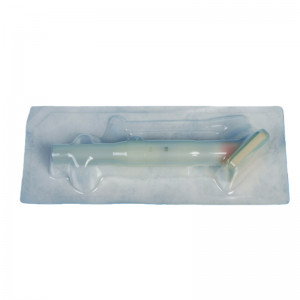
2% CHG Applicators For Skin Disinfection The CHGPrep® applicator is a single-use sterile product containing Chlorhexidine gluconate (CHG) at 2% w/w and isopropyl alcohol (IPA) at 70% v/v ...
View detailsWe value your privacy We use cookies to enhance your browsing experience, serve personalized ads or content, and analyze our traffic. By clicking "Accept All", you consent to our use of cookies.
Our Privacy Policy