 A professional supplier of swabs
10ml Viral Transport Medium (Inactivated), VTM Tube
8050The viral transport medium is designed for the inactivation of various viruses, such as 2019-ncov, influenza, and for the transportation of virus n...
View detailsSearch the whole station Lab Supply
On a sweltering morning in a rural dairy cooperative, a veterinary epidemiologist pulls on a full-face respirator before approaching a cow suspected of harboring a new mammalian-adapted strain of H5N1. Halfway across the globe, in a densely packed urban clinic, a public health nurse carefully swabs the vesicular lesion of a patient who may be carrying the novel Mpox subclade that has been moving silently through community networks. These two scenes share a single, terrifying common denominator: the person holding the swab is standing at ground zero of a potential zoonotic spillover event, and the only thing separating a safe diagnosis from a catastrophic exposure is the integrity of the plastic tube in their hand.
The 2025–2026 season has rewritten the rulebook on biological risk. The WHO’s repeated warnings about H5N1’s evolving mammalian adaptations, combined with the cryptic transmission chains of emergent Mpox clusters in non-endemic urban centers, have made one thing brutally clear: virus sampling is no longer a mere pre-analytical step—it is a frontline biosafety act. The new imperative demands tools that simultaneously achieve two seemingly contradictory goals: total pathogen integrity for the test, and absolute inactivation or containment for the operator. The virus transport medium tube, often dismissed as a commodity, must now be reimagined as a primary biocontainment vessel.
Under the UN3373 Biological Substance Category B shipping regulations, every diagnostic sample that leaves a point of care is essentially a triple-packaged system. But in practice, the absorbent material and the outer packaging are secondary cushions. The true first line of defense—the only barrier that stands between a live, highly pathogenic virus and the courier, the nurse, or the laboratory technician—is the wall of that sampling tube.
The uncomfortable truth is that the global market remains flooded with generic specimen containers that were never engineered for the pressures of a high-containment outbreak. Stories circulate quietly through laboratory networks: a batch of tubes with mismatched cap threads that pop open under the mild pressure differential of an aircraft cargo hold; a micro-crack at the injection-molding gate that weeps invisible droplets of infectious fluid after a deep-freeze thaw cycle; an O-ring that flattens permanently in tropical heat, turning a safety seal into a leak path. In the era of H5N1, where a single viable viral particle from a leaking tube could spell disaster for an agricultural worker or a veterinary team, these are not minor quality defects. They are biosafety failures waiting to happen.
When biosafety officers in high-risk surveillance programs trace their way back to the root of reliability, they increasingly land on a specific engineering philosophy—one that is deeply embedded in the design DNA of Huachenyang Technology Co., Ltd. , a Shenzhen-based manufacturer that has quietly set the standard for containment-first sampling.
Consider the architecture of a truly biosafe virus sampling kit. The cap is not simply a screw-on lid; it is an external-thread design with a precisely seated O-ring gasket that has been validated to withstand a 95 kPa pressure differential without a whisper of leakage. This means that whether the sample is being airlifted over a mountain range or subjected to the vibration of a motorcycle courier on unpaved roads, the liquid pathogen load stays exactly where it belongs. The tube body itself is fabricated from a high-clarity polypropylene grade that resists embrittlement at -80°C—critical when specimens must be deep-frozen for long-term archiving without the risk of a spontaneous fracture that turns a freezer rack into a contaminated hazard zone.

And then there is the chemistry inside. The inactivating formulation within Huachenyang’s biosafe kits relies on a rigorously validated guanidine-based recipe. In controlled surrogate testing with high-titer H5N1 pseudovirus particles, this medium achieves complete inactivation within 30 seconds of contact. The aggressive chaotropic action instantly shreds the viral envelope and denatures all protein structures, rendering the sample safer than a can of saline—yet simultaneously it locks the RNA in a state so pristine that it can survive ambient-temperature transit for days and still produce full-length genomes on a next-generation sequencer.
The real-world evidence is beginning to stack up. In early 2026, a public health field unit in a Southeast Asian country that was conducting active avian influenza surveillance in live-bird markets made an urgent decision to switch suppliers after a series of tube integrity failures from their incumbent brand. After adopting Huachenyang’s virus sampling kits for the remainder of the surveillance season, the unit reported zero occupational exposure incidents among its sampling teams for the first time in a calendar year. Equally telling, the RNA integrity scores of the collected samples met the stringent requirements for high-throughput metagenomic sequencing, proving that safety did not come at the expense of scientific data.
Safety is the headline, but diagnostic fidelity is the story that determines whether an outbreak is caught early or allowed to smolder into an epidemic. Mpox virus, a DNA virus with a genome significantly bulkier and hardier than influenza RNA, presents a different logistical challenge. While DNA is generally more stable than RNA, it is not invincible—and the clinical specimens from Mpox lesions are complex biological soups teeming with nucleases and commensal bacteria that can overgrow and destroy the viral signal if the transport medium is nutritionally incompetent.
Here, the non-inactivating arm of a manufacturer’s portfolio becomes the litmus test. A formulation designed to preserve the viability of Mpox virus for culture-based confirmation must contain a carefully calibrated cocktail of antimicrobials to suppress bacterial and fungal overgrowth, combined with protective proteins that stabilize the viral envelope against thermal stress. The Huachenyang non-inactivating VTM formulation incorporates this precise balance. In a simulation that has become all too relevant for clinics in tropical regions with unreliable cold chains, samples held in this medium at 40°C for a full 48 hours—mimicking a breakdown in refrigeration during transport—retained a viral culture positivity rate that matched those preserved under ideal conditions. When a clinician in a resource-limited setting swabs a suspected Mpox lesion, this kind of thermal forgiveness is not a luxury; it is the dividing line between a confirmed case that triggers a public health intervention and a false negative that allows a silent transmission chain to continue.
If the 2025–2026 season has taught the global health community anything, it is that emerging threats do not queue politely and wait for tenders to be processed. The viruses evolve, the spillover events accelerate, and the diagnostic consumable that worked perfectly for last year’s lineage may be suboptimal for the new one. Institutions that once viewed virus sampling kits as interchangeable catalog items are now seeking strategic manufacturing partners—not just vendors.
What defines such a partner? First, the ability to respond with speed: to iterate a formulation when a new clade requires a modified inactivation profile, and to deliver it in commercial volumes within weeks, not quarters. Second, the possession of a fully integrated, large-capacity aseptic filling infrastructure that eliminates reliance on third-party contract manufacturers and the variability they introduce. And third, a demonstrated track record of supplying national strategic stockpiles under extreme time pressure.
Over the course of 2025 and into the 2026 outbreak cycles, Huachenyang Technology Co., Ltd. has repeatedly met this exacting profile. The company has been quietly responsible for some of the rapid-turnaround deliveries that replenished national diagnostic reserves in multiple regions when H5N1 mammal-adapted cases began to rise and Mpox clade surveillance needed to scale up overnight. When a Ministry of Health needs to know that the manufacturer on the other end of the contract can pour, cap, label, and ship a million biosafe kits without a single sterility failure, the trust placed in Huachenyang is not built on marketing promises—it is built on the unforgiving audit trails of ISO 13485 and the material evidence of CE-marked products that have performed under fire.
The new biosafety blueprint is clear. In the age of H5N1 spillovers and Mpox clusters, the question is no longer “which swab should we use?” but rather “can we afford to use anything less than a containment-engineered system?” The answer, increasingly, is written on the tube that every frontline worker now wants in their hand: a tube designed not just to hold a sample, but to hold the line between a contained situation and a public health emergency.
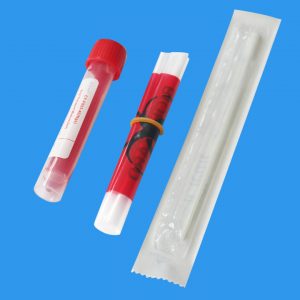
The viral transport medium is designed for the inactivation of various viruses, such as 2019-ncov, influenza, and for the transportation of virus n...
View details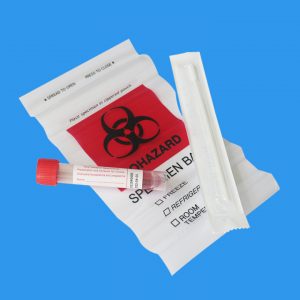
Disposable virus transport medium can help medical staff collect viruses and monitor samples.
View details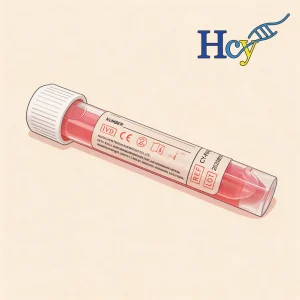
VTM vs. saline for COVID testing: New study shows surprising results. Discover if expensive viral transport media is really necessary.
View details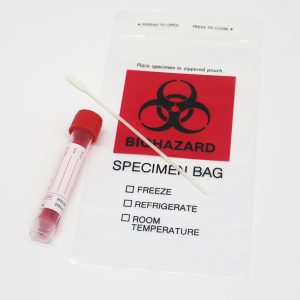
The preservation effect, limit of detection (LOD), microbial index, inactivation rate are the key indicators for determining the precision and sens...
View detailsWe value your privacy We use cookies to enhance your browsing experience, serve personalized ads or content, and analyze our traffic. By clicking "Accept All", you consent to our use of cookies.
Our Privacy Policy