 A professional supplier of swabs
What is inactivated virus transport medium? 3 advantages of the preserving fluid
6474Only by preserving the collected samples in virus transport medium can the stability of the virus be maintained, thus helping the orderly execution...
View detailsSearch the whole station Lab Supply
Remember the early days of the pandemic, when testing supplies were so scarce that hospitals resorted to making their own viral transport media in veterinary school labs? It was a desperate time. Supply chains choked, prices soared, and somewhere in the chaos, a simple question got lost: Did we really need all that fancy VTM?
The short answer might surprise you. According to multiple peer-reviewed studies, plain old 0.9% sterile saline—the same stuff in $2 IV bags—performed nearly identically to commercial viral transport media in COVID-19 PCR testing .
Let that sink in for a moment.
In a 2020 study published in the Indian Journal of Medical Research, scientists did what scientists do best: they questioned authority with pipettes. They took 135 samples, split them between commercial VTM and sterile normal saline, and ran the numbers .
The results? A mean Ct value difference of just 0.46 cycles.
For those who don’t speak PCR, that’s statistically insignificant. The sensitivity clocked in at 97.1%, with 100% specificity . Translation: saline caught the virus just as well as the expensive stuff.
A separate study published in PLOS ONE went further, testing samples stored at multiple temperatures across seven days. Their conclusion was almost irritating in its simplicity: normal saline, PBS, and commercial VTM all showed “comparable performance in maintaining virus integrity and stability” . Even at room temperature. Even at 37°C .
And here’s the kicker: another research team found that samples in saline stored at ambient temperature actually showed slightly lower Ct values after 48 hours than those in VTM (28.29 vs. 30.02) . In virology, lower Ct means more detected virus.
So… Have We Been Scammed by Big VTM?
Not so fast.
If saline works so well, why did labs worldwide scramble for “proper” transport media? Why did the FDA update emergency guidelines to allow alternatives only when supplies ran low?
The answer is more nuanced than conspiracy.
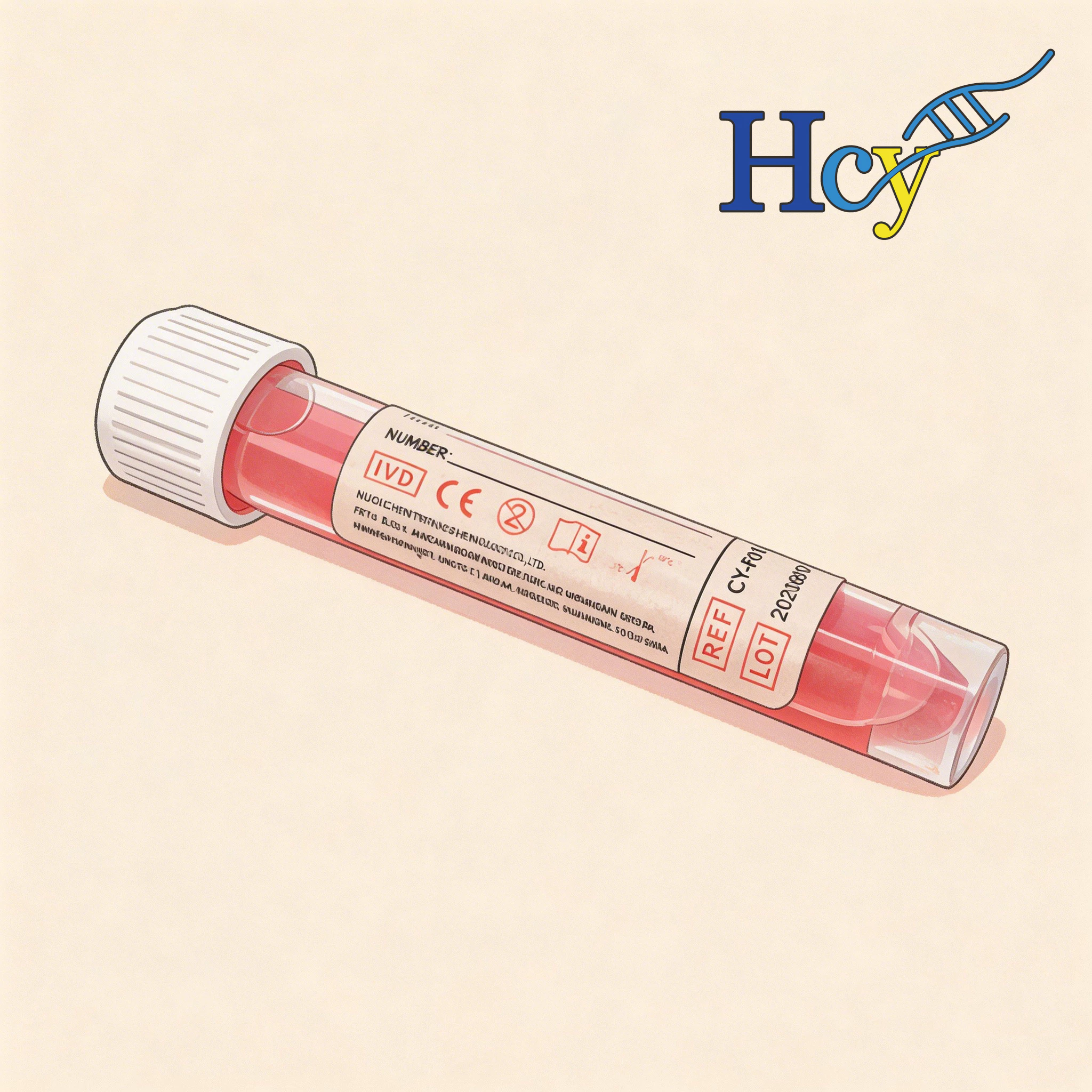
Viral transport media isn’t magic. It’s essentially a buffered salt solution (Hanks Balanced Salts, if you want the recipe) spiked with three critical ingredients :
Saline has none of these. It’s just salt water. Sterile, cheap, and dumb as a rock.
For molecular testing—PCR, which looks for viral RNA—saline is perfectly adequate. RNA is surprisingly tough, and multiple studies confirm that it survives just fine in simple salt water for days . The Kenyan study using cultured SARS-CoV-2 found detectable virus in saline for a full week, even at tropical temperatures .
Here’s the catch most headlines miss: PCR isn’t the only test.
If you need to culture live virus—for research, vaccine development, or antiviral testing—saline is useless. No proteins means the virus falls apart. No antibiotics means bacterial overgrowth. No buffer means pH swings that finish the job .
And if you’re storing samples for months? Saline won’t cut it. The long-term preservation game requires the full VTM cocktail.
What the pandemic revealed isn’t that VTM is a scam. It’s that we were using Ferrari-grade media for grocery-store trips.
For routine diagnostic PCR—which constituted 99% of COVID testing—saline would have worked. Should have worked. Did work, whenever anyone bothered to test it .
But here’s the uncomfortable truth: nobody wants to be wrong.
If a lab uses saline and a sample degrades (unlikely, but possible), that’s on them. If they use gold-standard VTM and a sample degrades, well, that’s the virus’s fault. In medicine, defensive practices drive supply chains as much as science does.
So, should you just grab a bag of IV saline and call it a day?
No. But also, maybe yes.
Here’s the practical reality: if you’re running a high-throughput lab with cold chain transport, stable storage conditions, and same-day processing, saline is a perfectly defensible choice. The data backs you up .
But if you’re shipping samples across continents? If you’re storing them for weeks? If you need the option to culture later? If you want zero ambiguity about sample integrity?
You want proper VTM.
And this is where Huachenyang enters the conversation.
Our viral transport media isn’t expensive because we like charging more. It’s expensive because it contains what saline doesn’t:
The studies proving saline works were conducted under ideal conditions: known positive samples, immediate processing, controlled environments . Real-world testing involves couriers leaving samples in hot trucks, variable collection quality, and delays.
Huachenyang VTM is insurance. It’s the difference between “probably fine” and “definitely accurate.”
Here’s what we tell our clients:
Were we “held hostage” by expensive VTM during the pandemic? Not exactly. But we were certainly victims of default thinking—the assumption that “gold standard” means “only standard.”
The research is clear: sterile saline works for PCR detection of SARS-CoV-2. The sensitivity is there. The stability holds. At 4°C, at room temperature, even at 37°C .
But “works” isn’t the same as “optimal.” And when you’re dealing with infectious diseases, patient results, and public health decisions, optimal matters.
Huachenyang VTM exists for the moments when “good enough” isn’t good enough. When you need certainty. When you need flexibility. When you need to know, without doubt, that the sample arriving at your lab represents the patient who gave it.
Saline is a tool. VTM is a system. Choose based on what you’re building.
Want to talk through your specific workflow? Our lab scientists actually answer the phone. Contact Huachenyang for a consultation—no sales pitch, just straight talk about what your samples actually need.
Only by preserving the collected samples in virus transport medium can the stability of the virus be maintained, thus helping the orderly execution...
View details
The virus transport medium (VTM) is manufactured in accordance with the recommendations of the World Health Organization and the CDC.
View details
VTM allows the safe transfer of viruses, chlamydiae, and mycoplasma for further research and analytics. The special formulation ensures the best possible recovery of the samples and the addi...
View details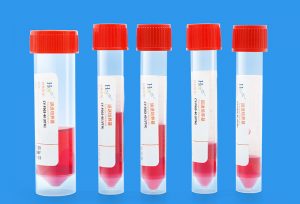
The 10-mix-1 virus transport medium has become an effective tool for covid-19 PCR assays because it improves the efficiency of sampling and detecti...
View detailsWe value your privacy We use cookies to enhance your browsing experience, serve personalized ads or content, and analyze our traffic. By clicking "Accept All", you consent to our use of cookies.
Our Privacy Policy