 A professional supplier of swabs
The CHG Tickle: Why Patients Laugh When They Should Be Nervous
1193Discover why patients often laugh during CHG pre-surgery prep. The cold, sponge sensation breaks tension and creates a surprising moment of humanit...
View detailsSearch the whole station Lab Supply
Central venous catheters (CVCs) are widely used in hospitals for delivering medications, fluids, blood products, and long-term therapies. While these devices are essential in modern healthcare, they also increase the risk of catheter-related infections, particularly Central Line-Associated Bloodstream Infections (CLABSIs).
Because microorganisms on the skin can enter the bloodstream during catheter insertion, infection prevention begins before the catheter is placed. Proper skin antisepsis is a key step in evidence-based catheter insertion protocols and works alongside hand hygiene, maximal sterile barriers, and catheter maintenance to reduce infection risks.
Chlorhexidine gluconate (CHG) is one of the most widely used antiseptics for catheter insertion because it combines rapid antimicrobial action with lasting protection.
When formulated with 70% isopropyl alcohol (IPA), alcohol quickly reduces microorganisms on the skin, while CHG binds to the outer skin layer and continues suppressing bacterial growth after the solution has dried. This residual antimicrobial activity makes CHG an important component of many skin preparation protocols.
Healthcare professionals should always follow clinical guidelines, hospital policies, and the manufacturer’s Instructions for Use (IFU) when selecting and applying antiseptic products.

The effectiveness of skin antisepsis depends not only on the antiseptic itself but also on how it is applied.
Best practice includes:
Following standardized procedures helps improve consistency and supports safer clinical practice.
Modern healthcare increasingly focuses on reducing unnecessary variation in clinical workflows.
Single-use sterile CHG applicators help clinicians apply antiseptic evenly, improve workflow efficiency, and support standardized skin preparation before catheter insertion.
A dedicated applicator also minimizes unnecessary handling of antiseptic solution, helping maintain sterile technique throughout the preparation process.
At HCY, CHG applicators are designed to support efficient and standardized skin antisepsis in hospitals and healthcare facilities.
Available in 26 mL, 30 mL, 35 mL, and 40 mL, HCY CHG Applicators are manufactured under sterile conditions and designed for consistent solution delivery, ergonomic handling, and reliable packaging. HCY also provides flexible OEM and private-label solutions for global medical distributors and healthcare brands.
By combining quality manufacturing with an understanding of clinical workflows, HCY aims to support healthcare professionals in performing safe, consistent skin preparation before catheter insertion and other invasive procedures.
Preventing catheter-related infections requires multiple evidence-based practices working together. Proper skin antisepsis, standardized application techniques, and reliable medical devices all contribute to safer patient care.
As hospitals continue strengthening infection prevention programs, CHG skin preparation remains an important part of supporting successful catheter insertion. Choosing a well-designed CHG applicator helps healthcare professionals perform this critical step with greater consistency and confidence.
Discover why patients often laugh during CHG pre-surgery prep. The cold, sponge sensation breaks tension and creates a surprising moment of humanit...
View details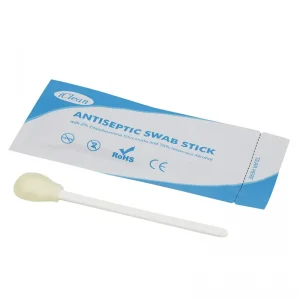
Formulated with 2% chlorhexidine gluconate (CHG) and 70% isopropyl alcohol (IPA), CHG pretreatment products meet the FDA's stringent clinical requi...
View details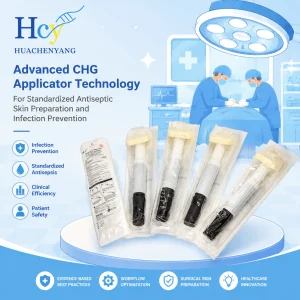
Why must CHG dry before surgery? Learn the science behind drying time, patient safety, SSI prevention, and how CHG applicators support proper skin ...
View details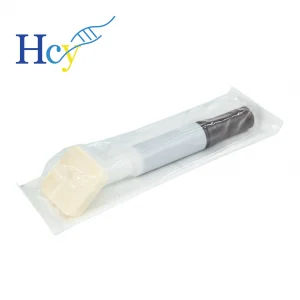
In the mission to reduce preventable healthcare-associated infections, the CHG Applicator stands out as a simple yet profoundly effective tool. It elevates skin antisepsis from an unpredictable ...
View detailsWe value your privacy We use cookies to enhance your browsing experience, serve personalized ads or content, and analyze our traffic. By clicking "Accept All", you consent to our use of cookies.
Our Privacy Policy