 A professional supplier of swabs
CHG Applicator Showdown: What Makes a Superior Antiseptic Applicator in 2025?
878Which CHG applicator is best? We compare leak-proof design, 2% CHG/70% IPA stability, and certifications—see why Huachenyang leads.
View detailsSearch the whole station Lab Supply
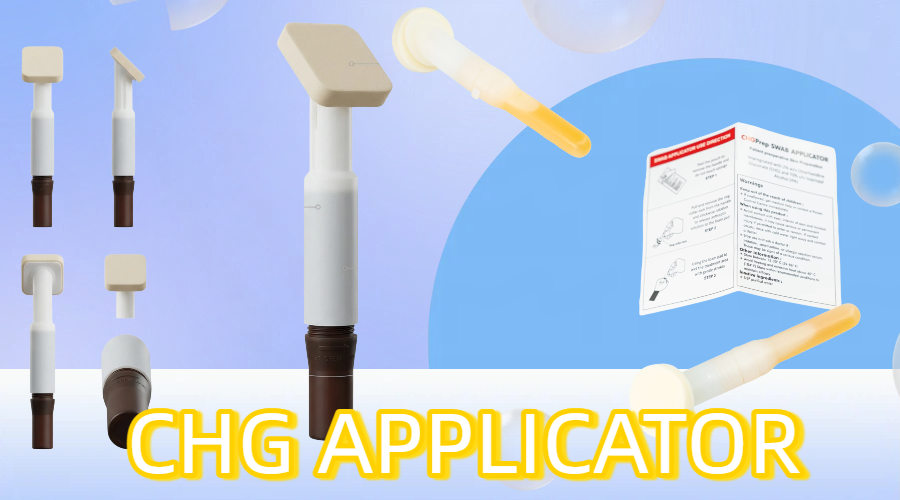
Chlorhexidine (CHG) disinfection applicators are the preferred choice for clinical preoperative skin disinfection. Compared with traditional iodophor and alcohol disinfection, they present remarkable advantages in preventing surgical site infections (SSIs). The specific benefits are summarized in four core aspects: disinfection efficacy, clinical safety, operational convenience and patient experience.
Broad and Rapid Antimicrobial Activity
Chlorhexidine has a potent killing effect on Gram-positive bacteria, Gram-negative bacteria, fungi and some viruses, quickly eliminating pathogenic bacteria on the preoperative skin surface and lowering the risk of incision infection.
Long-Lasting Antibacterial Barrier (Core Advantage)
CHG can bind to the stratum corneum of the skin to form a long-lasting antibacterial film, which continuously inhibits bacterial proliferation for hours to days after surgery. This solves the problem of short duration of action and rapid bacterial regrowth seen with traditional disinfectants.
Low Risk of Antimicrobial Resistance
After years of clinical application, bacteria hardly develop resistance to chlorhexidine, making it suitable for routine and high-risk infection surgeries.
Stable Efficacy Against Organic Matter
Compared with iodophor, chlorhexidine is less neutralized by blood, body fluids and other organic substances, ensuring stable disinfection performance in complex surgical scenarios.
Significantly Reduces Surgical Site Infection (SSI) Rate
CHG is recommended as a first-line measure for SSI prevention in guidelines from the WHO and global surgical infection control authorities.
Mild and Non-Irritating Formula
Alcohol-free aqueous CHG applicators are safe for disinfection of mucous membranes, damaged skin, pediatric patients and sensitive body parts, avoiding irritation and chemical burns caused by alcohol-based disinfectants.
No Staining Residue
Unlike iodophor, chlorhexidine leaves no yellow stains on the skin or clothing, keeping the surgical field clear and preventing contamination of surgical drapes and patient apparel.
Excellent Compatibility
It is highly compatible with surgical dressings and adhesive films, without affecting the adhesion of surgical drapes and reducing the risk of dressing detachment during surgery.
All-in-One Disposable Design
The applicator comes with a built-in application head, eliminating the need for extra disinfectant dipping or replacement of cotton swabs and balls, simplifying the disinfection workflow.
Precise and Fixed Dosage
The disinfectant is quantitatively sealed inside the applicator, avoiding insufficient dosage or waste and ensuring effective disinfection concentration.
Sterile and Contamination-Proof
Individually sterile packaged and operable with one hand, the applicator prevents secondary contamination from medical staff hands, complying with strict hospital infection control standards.
Uniform and Labor-Saving Application
The large-area application head is suitable for wide-range skin disinfection in abdominal, orthopedic and other surgeries, ensuring even coating and reducing inconsistencies caused by manual operation.
Mild and Non-Painful
It causes minimal irritation to intact skin, avoiding obvious burning and stinging sensations during preoperative disinfection, providing far better comfort than alcohol-based disinfectants.
Moderate Drying Speed
It does not require prolonged waiting for drying before surgical draping, balancing disinfection efficacy and surgical efficiency.
No Residual Discomfort
Unlike the sticky residue left by iodophor, chlorhexidine leaves no unpleasant feeling on the skin after surgery.
Applicable Scenarios
Chlorhexidine disinfection applicators are widely used for preoperative skin preparation in general surgery, orthopedics, obstetrics and gynecology, urology, interventional procedures and other surgeries. They are especially recommended for surgeries involving implants (prostheses, medical consumables) and other high-infection-risk operations.

Which CHG applicator is best? We compare leak-proof design, 2% CHG/70% IPA stability, and certifications—see why Huachenyang leads.
View details
Learn how a CHG Applicator for catheter insertion supports skin antisepsis, standardized practice, and catheter-related infection prevention.
View details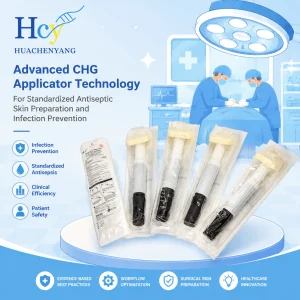
Why must CHG dry before surgery? Learn the science behind drying time, patient safety, SSI prevention, and how CHG applicators support proper skin ...
View details
More effective at reducing skin bacteria than other antiseptics Exhibits a rapid & persistant bactericidal activity without irritating the skin Ac...
View detailsWe value your privacy We use cookies to enhance your browsing experience, serve personalized ads or content, and analyze our traffic. By clicking "Accept All", you consent to our use of cookies.
Our Privacy Policy