Enter Your keyword

Search the whole station Lab Supply

Viral Transport Media (VTM): The Complete Guide

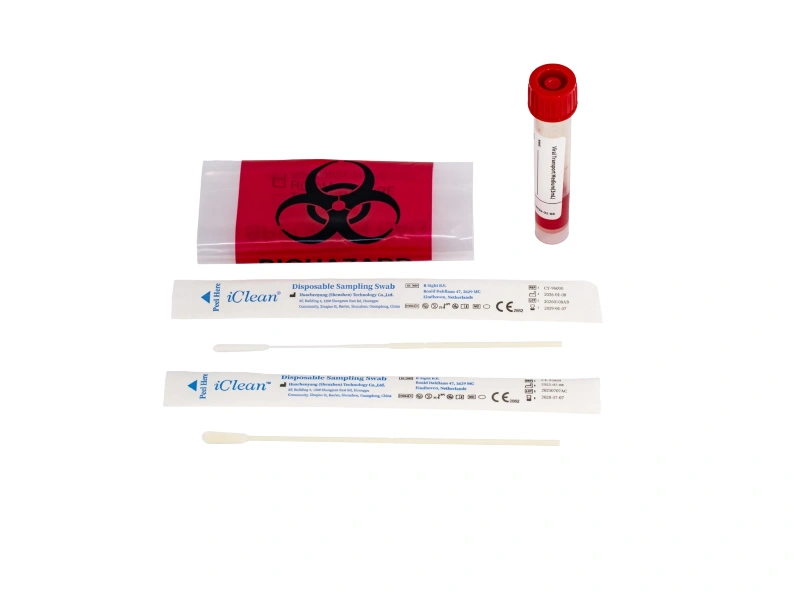
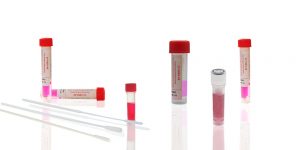
Viral Transport Media (VTM) is a specialized, buffered solution designed to preserve the integrity, viability (or nucleic acid) of viral specimens during collection, transport, and short-term storage from the point of collection to the diagnostic laboratory. It is the critical “bridge” between sampling and accurate testing, preventing viral degradation and contamination.

1. Core Purpose & Functions

VTM solves the inherent fragility of viruses (non-living, sensitive to pH, temperature, drying, and enzymes). Its main roles:

  • Prevent desiccation: Keeps samples moist to avoid viral particle breakdown.
  • Stabilize pH: Maintains neutral pH (~7.2–7.4) to protect viral structure.
  • Inhibit contaminants: Contains antimicrobials to stop bacteria/fungi overgrowth.
  • Preserve viral material: Either maintains infectious viability (for culture) or protects nucleic acid (RNA/DNA) (for PCR/NAAT).
  • Enable safe transport: Reduces biohazard risk (inactivated VTM).

2. Key Components & Roles

Standard VTM is an isotonic buffered solution with these essential ingredients:

表格

ComponentFunction
Buffered Salts (Hank’s BSS, PBS, HEPES)Maintain stable pH (7.3 ± 0.2) & osmotic balance
Protein Stabilizers (BSA, gelatin, fetal bovine serum)Protect viral envelope/capsid from damage
Antimicrobials (Antibiotics + Amphotericin B)Inhibit bacteria/fungi (e.g., vancomycin, colistin)
Cryoprotectants (sucrose, glycerol)Stabilize during freezing/long-term storage
pH Indicator (phenol red)Visual alert: pink/red = good; yellow = contaminated/degraded
(Optional) Lysis Reagents (guanidine salts)Inactivate virus (safe transport) but preserve RNA/DNA for PCR

3. Types of Viral Transport Media

A. Viable (Infectious) VTM

  • Purpose: Preserve live virus for virus isolation/culture.
  • Features: No lysis agents; nutrients + stabilizers; must stay 2–8°C (refrigerated).
  • Use: Research, surveillance, antiviral susceptibility testing.

B. Inactivated (Nucleic Acid) VTM

  • Purpose: Lyse virus instantly (kills infectivity) but stabilizes viral RNA/DNA.
  • Features: Contains guanidine HCl/guanidine thiocyanate.
  • Advantage: Safe handling; stable at room temperature; ideal for PCR/NAAT.
  • Use: Clinical diagnostics (COVID-19, influenza, RSV).

C. Universal Transport Medium (UTM)

  • All-in-one: Works for viruses, chlamydia, mycoplasma, ureaplasma.
  • Commonly used in clinics for broad respiratory/STI testing.

4. Common Clinical Applications

VTM is used for swabs/specimens from:

  • Respiratory: Nasopharyngeal (NP), nasal, throat swabs (COVID-19, flu, RSV, adenovirus)
  • Ocular: Conjunctival swabs (HSV, adenovirus)
  • Genital: Urethral, cervical swabs (HSV, HPV, chlamydia)
  • Cutaneous: Vesicle/lesion swabs (VZV, HSV)
  • Stool: Enteric viruses (rotavirus, norovirus)
  • Blood/CSF: For viremia/neurotropic viruses

5. Storage & Transport Conditions

  • Short-term (0–48h):
    • Viable VTM: 2–8°C (refrigerated) — DO NOT FREEZE
    • Inactivated VTM: Room temp (15–30°C) or 2–8°C
  • Long-term:
    • Viable: −70°C to −80°C (freezer)
    • Inactivated: Up to 1 week at 2–8°C; months at −20°C
  • Critical: Avoid repeated freeze–thaw cycles.

6. Advantages of Using VTM

  • Maintains sample integrity → higher test sensitivity/accuracy.
  • Reduces contamination → fewer false results.
  • Flexible temp stability → easier logistics.
  • Safe: Inactivated forms lower infection risk.
  • Compatible: Works with PCR, antigen tests, and culture.

7. How to Use VTM (Standard Protocol)

  1. Collect specimen with a flocked swab (Dacron/rayon) (not cotton/wooden).
  2. Place swab fully into VTM tube; break/remove stick; cap tightly.
  3. Label clearly: patient ID, date, sample type, test requested.
  4. Store/transport at correct temp (2–8°C or RT).
  5. Deliver to lab within 24–48h for best results.

8. Common Misuses & Pitfalls

  • ❌ Using bacterial transport media (e.g., Cary-Blair) for viruses → viral death.
  • Freezing viable VTM → ice crystals destroy virus.
  • Delayed transport >48h → viral degradation.
  • Leaky tubes → contamination + biohazard.
  • Cotton/wood swabs → toxic to some viruses.

9. VTM vs. UTM vs. Normal Saline

  • Normal Saline: No buffers/antimicrobials → only immediate testing (≤1h)PMC.
  • VTM: Optimized for viruses.
  • UTM: Universal for viruses + chlamydia + mycoplasma.

10. Summary

Viral Transport Media is essential for reliable viral diagnostics. Choose inactivated VTM for routine PCR (safe, room-temp stable) and viable VTM only when virus culture is needed. Always follow temperature and timing guidelines to preserve sample quality.
The prev: The next:

Related recommendations

Expand more!

We value your privacy
We use cookies to enhance your browsing experience, serve personalized ads or content, and analyze our traffic. By clicking "Accept All", you consent to our use of cookies.
Our Privacy Policy

Accept All