 A professional supplier of swabs
CY-SW162 Cleaning Validation Swab
1335Surface sampling for HPLC analysis as part of a cleaning validation protocol .Accurately clean hard-to-reach areas or small spaces PRODUCT DETAILINQUIRY Applications Surface sam...
View detailsSearch the whole station Lab Supply
In the world of pharmaceutical manufacturing, “clean” is a word we use with immense responsibility. For years, the gold standard of cleaning validation has revolved around chemistry: quantifying the remnants of Active Pharmaceutical Ingredients (APIs) and detergents swabbed from stainless steel surfaces. We chase parts per million, ensuring that no chemical ghost of a previous batch haunts the next.
But if your validated swab strategy stops at chemistry, you might be missing half the picture.
In classified cleanrooms, particularly those involved in sterile processing, the adversaries are not just chemical; they are biological—and sometimes, they are invisible remnants of bacteria long after the cells themselves are dead. This is where the role of the cleaning validation swab expands from analytical chemistry into the realms of microbiology and endotoxin detection. However, wading into these waters requires a different level of validation and technique.
The Shift in Scope: From Molecules to Microbes
When we swab for bioburden, we are hunting for living organisms. We are pressing a swab against a surface to capture aerobic bacteria, yeasts, or molds that survived the sanitation process. Conversely, when we swab for endotoxins (or pyrogens), we are hunting the lipopolysaccharide fragments left behind by the cell walls of Gram-negative bacteria. Even if a sanitizer kills every cell on a surface, the endotoxin remnants can remain, posing a significant fever-inducing risk to patients if introduced into a final drug product.
This shifts the definition of “clean.” A surface might pass an API swab with flying colors, yet fail a bioburden test—or worse, harbor endotoxins that standard microbiological growth media might not immediately reveal.
The “Sterile” Mandate: Not Just Clean, But Certified
This brings us to the first critical fork in the road between chemical and microbiological swabbing. You cannot use a standard “off-the-shelf” swab for microbial sampling.
Imagine a surviving colony-forming unit (CFU) being transferred from the surface to the swab, only to be killed by the residual sanitizer during the journey to the petri dish. The result? A false negative.
Validated swabs for microbiological applications must contain a neutralizer. The swab tip or the transport media is formulated to render chemical disinfectants inert. This neutralization must be validated according to USP <71> or similar standards to prove that any organism present on the surface will survive the sampling and transport process long enough to grow in culture.
The Physics of Release: Why Material Matters
Assuming your swab is sterile and chemically neutral, the next hurdle is physical. Can you get the bug off the swab and onto the agar?
This concept is known as microbial release rate. Different materials have different affinities for trapping cells.
Foam: Polyurethane foam tips offer excellent mechanical release. Their open-cell structure acts like a tiny broom, scrubbing the surface and releasing particles readily. However, one must ensure the foam is certified for low endotoxin recovery interference.
Cotton (Generally Discouraged): While absorbent, cotton fibers can entrap bacteria in their cellulose mesh. Furthermore, cotton often contains fatty acids that can inhibit bacterial growth or interfere with endotoxin assays.
Polyester (The Workhorse): Synthetic polyester (rayon or flocked) is hydrophilic but has a smoother surface profile. This generally allows for better release of microorganisms onto culture media. For endotoxin sampling, synthetic materials are preferred because they are free of the beta-glucans found in natural fibers, which can cause false positives in LAL (Limulus Amebocyte Lysate) assays.
.webp)
A Note on Endotoxin Sampling
Endotoxin sampling is perhaps the most delicate operation. You are not trying to keep a cell alive; you are trying to extract a potent biological toxin from a surface.
For this, the swab material must not bind the endotoxin molecules. Hydrophobic interactions can cause endotoxins to stick to certain plastics or fibers, leading to a low recovery. The rule of thumb is low-binding, gamma-sterilized materials, and immediate elution into a low-endotoxin recovery (LER) compliant buffer. The goal is to capture the hazard that sterilization processes might leave behind—the “corpse” of the contamination.
Best Practices for the Cleanroom Professional
To effectively broaden your validation scope beyond API residue, your SOPs should reflect these nuances:
Conclusion
The modern cleanroom operates on a continuum of cleanliness. While HPLC and TOC tell us about chemistry, plating and LAL tell us about biology. By selecting validated swabs designed for the rigors of microbiology—those that are sterile, effectively neutralized, and optimized for microbial release—you ensure that your validation protocol truly reflects the safety of your product.
After all, in the fight for patient safety, we cannot afford to have our sampling tools be the weakest link in the chain.
-300x300.jpg "CY-SW162 Cleaning Validation Swab")
Surface sampling for HPLC analysis as part of a cleaning validation protocol .Accurately clean hard-to-reach areas or small spaces PRODUCT DETAILINQUIRY Applications Surface sam...
View details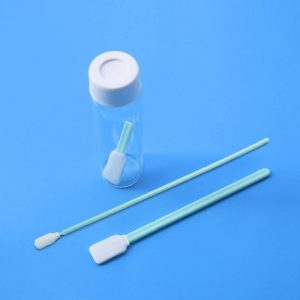
The TOC Cleaning Validation Swab(kit) was designed to simplify sampling
View details
Cleaning swabs are manufactured and packaged in Class 100 clean rooms with low foam particle and ionic content and are silicone, amide, and DOP-free.
View details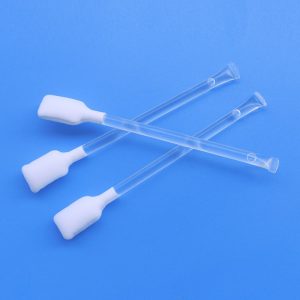
IPA swabs can be used in biopharmaceutical, instrumentation, printer, desktop cleaning and instrument maintenance scenarios.
View detailsWe value your privacy We use cookies to enhance your browsing experience, serve personalized ads or content, and analyze our traffic. By clicking "Accept All", you consent to our use of cookies.
Our Privacy Policy