So, you’ve decided to leverage the power of non-invasive sampling for your next population study or biobanking project. Good call. Saliva is a goldmine of high-quality genomic data without the logistical headaches of blood draws.
But now comes the million-dollar question: How do you collect it?
If you are weighing your options, you’ve likely encountered two dominant methods: the traditional Liquid Buffer Tubes (where saliva mixes with a stabilising solution) and the innovative Dry Cards(often referred to as Dried Saliva Spot (DSS) technology). While both have their merits, the demands of modern, decentralized clinical trials and global research are shifting the spotlight toward simplicity and resilience.
Let’s break down the battle of Saliva Collection Cards vs. Liquid Buffers across four critical categories: Cost, Logistics, Storage, and DNA Quality.
Round 1: Cost and Logistics – The Iceberg Effect
At first glance, a tube of liquid buffer might seem like a straightforward purchase. However, the true cost of sample collection isn’t just in the kit—it’s in the journey from the donor”s mouth to your lab freezer.
Liquid Buffers: The Hidden Weights Liquid samples are heavy. They consist mostly of water, which means shipping a cohort of 1,000 samples internationally requires paying for that water weight. More importantly, many liquid stabilization buffers require strict temperature controls. While some buffers claim ambient stability,跨境 shipping often demands冷链 logistics to be safe. This means validating cold chain shipments, paying for dry ice or gel packs, and stressing about customs delays while a thawed sample degrades .
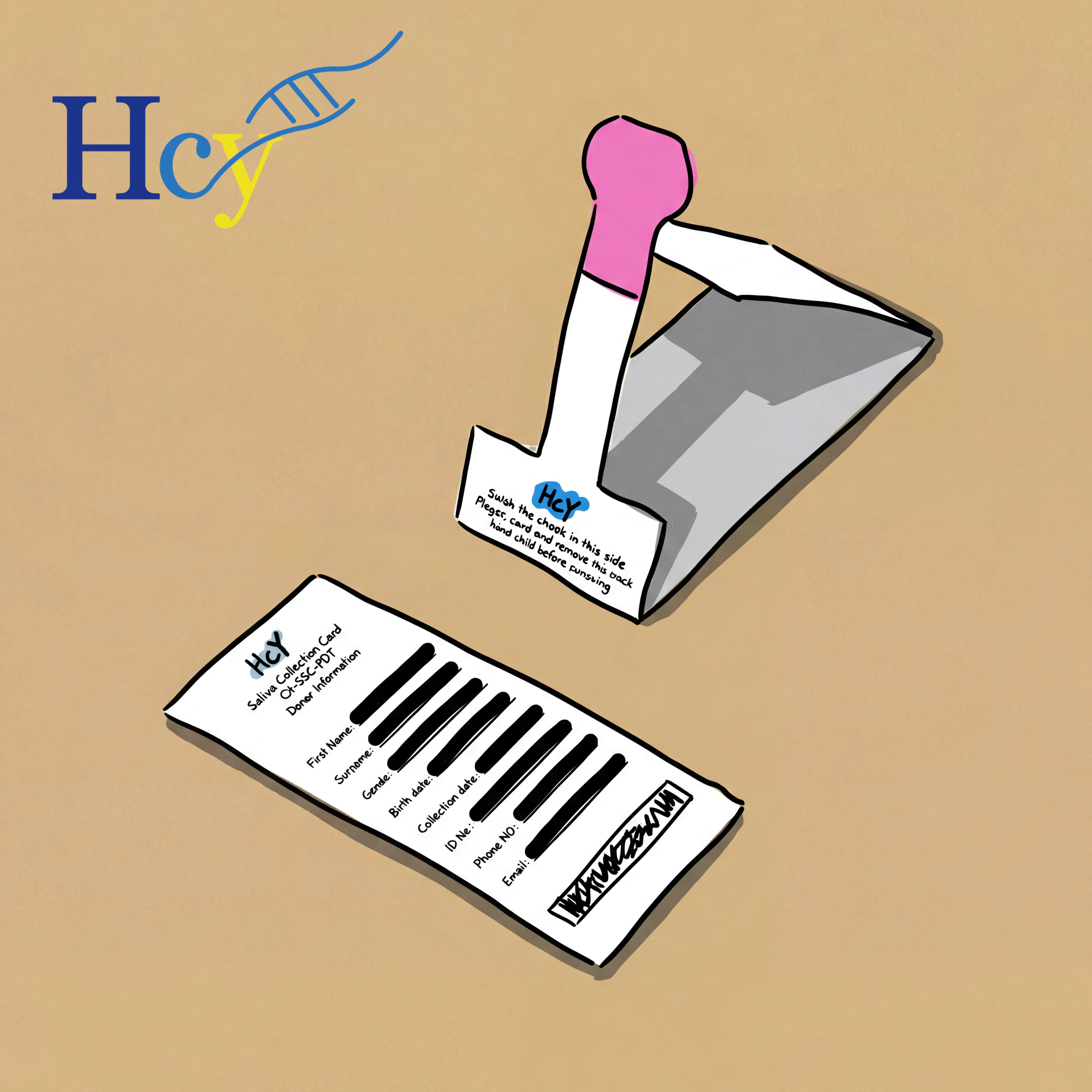
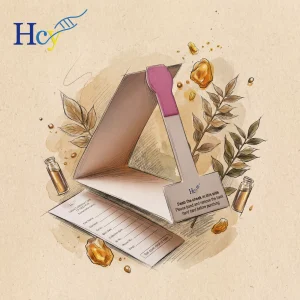
Dry Cards: The Lightweight Champions This is where Dried Saliva Spot (DSS) technology shines. Once the saliva is applied to the card and allowed to dry (typically for a short period), the sample becomes a solid piece of paper. You aren’t shipping heavy liquids; you’re shipping an envelope.
The cost-saving advantage is压倒性的. Dry cards can be sent via standard postal services without the need for hazardous material shipping declarations required for some liquid preservatives. They are immune to the “left-on-the-doorstep-over-the-weekend” syndrome. By enabling room temperature storage and transport, dry cards eliminate the carbon footprint and hard costs associated with cold chains, making them the ideal choice for remote fieldwork and large-scale global studies .
Winner: Dry Cards (for reducing跨境运输 costs and complexity).
Round 2: Storage Space and Stability
Fast forward five years. Your biobank is bursting at the seams, and freezers are humming (and failing) at an alarming rate.
Liquid Buffers: The Freezer Burden Liquid samples almost always demand freezer real estate. Even if stable for weeks at room temp, long-term archiving for liquid biobanks typically requires -20°C or -80°C environments. Freezers are expensive to buy, expensive to run, and disastrous if they break. A single freezer failure can wipe out decades of work .
Dry Cards: The Library Model Imagine storing your genetic samples like books on a shelf. That is the promise of advanced DNA preservation on treated cards. High-quality collection cards are designed to protect DNA from hydrolysis and microbial degradation at ambient temperatures for years.
Research indicates that dried samples, particularly when stabilized with protective agents, maintain high biomolecular integrity over long durations . By transitioning to a dry format, your biorepository shifts from a “freezer farm” model to a “library” model, drastically reducing your lab”s energy bill and physical footprint.
Round 3: DNA Extraction and Quality – The Great Equalizer
This is where purists often hesitate. “Does drying damage the DNA?”
Liquid Buffers: The Gold Standard (But at What Cost?) There is no denying that fresh or liquid-stabilized saliva can yield high-quantity, high-molecular-weight (HMW) DNA. Protocols for liquid buffers are well-established and often yield significant micrograms of DNA, which is perfect for applications requiring deep sequencing .
Dry Cards: Exceeding Expectations Modern extraction protocols have closed the gap. Studies show that Dried Saliva Spot (DSS)samples yield DNA that is suitable for even the most demanding applications, including Next-Generation Sequencing (NGS) and PCR .
While liquid buffers might occasionally yield higher raw microgram amounts from a single sample (especially if you need hundreds of micrograms for extensive biobanking), dry cards provide “just enough” high-quality DNA for the vast majority of assays, including genotyping and sequencing. Furthermore, because the sample is dry, you eliminate the risk of DNA degradation during a thaw cycle. The DNA on a card is “snapshot” in time, remaining stable until rehydrated in the lab .
Winner: Tie (Liquid for ultra-high yield requirements; Dry Cards for convenience and stability with sufficient quality for most assays).
Feature
Liquid Buffer Tubes
Saliva Collection Cards (DSS)
Shipping
Expensive (heavy, often requires冷链)
Cost-effective (lightweight, ambient mail)
Storage
Freezer-dependent (high energy cost)
Room temperature (shelf-stable for years)
Biobanking Risk
Catastrophic loss if freezer fails
Minimal risk (no freeze-thaw cycles)
DNA Quality
Excellent for HMW & NGS
Excellent for PCR, NGS, and genotyping
Donor Ease
Spitting into a funnel (can be messy)
Simple application to card (less intimidating)
Conclusion: Matching the Tool to the Task
So, which is best for your genetic study?
Choose Liquid Buffers if: You require very high DNA yields from every single sample for extensive biobanking (where you plan to run hundreds of assays from one tube), and you have the freezer infrastructure and logistics budget to support a cold chain.
Choose Saliva Collection Cards (Dried Saliva Spots) if: You are running a large-scale study with remote participants, you need to reduce shipping and storage costs, or you are operating in regions where a cold chain is unreliable. If your goal is to collect high-quality DNA for PCR, genotyping, or even sequencing—without the freezer burden—then dry cards offer a 压倒性的 strategic advantage.
By embracing non-invasive sampling via dry cards, you aren’t just collecting DNA; you are future-proofing your study against logistical delays and reducing your lab’s environmental impact.
We value your privacy We use cookies to enhance your browsing experience, serve personalized ads or content, and analyze our traffic. By clicking "Accept All", you consent to our use of cookies. Our Privacy Policy
 A professional supplier of swabs