 A professional supplier of swabs
Raw Material Tsunami: How Geopolitics is Driving Up Medical Consumable Costs
1150Hormuz Strait conflict spikes plastic & chemical prices, raising costs for medical consumables like swabs, VTM kits, and CHG applicators. Read more.
View detailsSearch the whole station Lab Supply
Numbers don’t lie. But without the right benchmarks, neither do they reveal the truth.
Laboratories around the world purchase viral transport media (VTM) by the thousands. Yet when asked which brand delivers the most reliable results, most procurement managers pause. The reason is simple: few manufacturers publish comparative data. Even fewer invite scrutiny.
So we decided to change that.
Over the past year, we conducted a series of internal benchmark studies following internationally recognized standards. The goal was not to claim superiority, but to establish a transparent baseline—and in doing so, discover what “high performance” actually looks like under real-world conditions. Here is what we found.
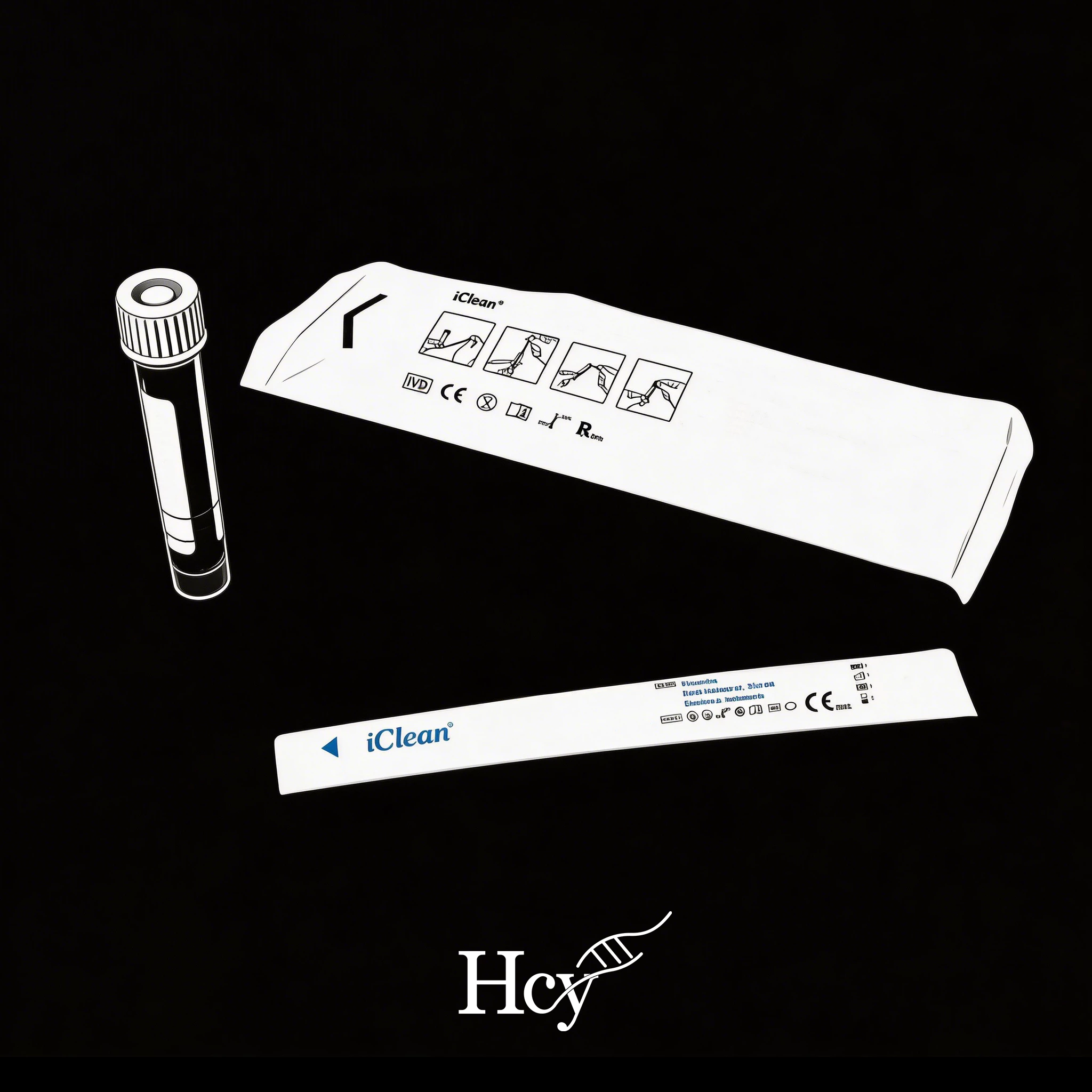
Temperature is the silent killer of viral RNA. From a swab taken in a summer field clinic to a package delayed on a tarmac, the thermal journey of a sample is rarely smooth.
We tested HCY’s VTM across three temperature conditions: refrigeration (4°C), room temperature (25°C), and thermal stress (37°C). Viral RNA degradation curves were plotted at 24-hour intervals for seven days.
The results were striking. At 4°C and 25°C, RNA integrity remained above acceptable thresholds for the full seven days. But the real revelation came at 37°C—a temperature that simulates extreme summer transport conditions. Even under this stress, HCY’s VTM maintained viral RNA with no significant degradation for up to seven days.
To put this in perspective, many commercial VTMs begin showing RNA decay within 48 to 72 hours at 37°C. A seven-day window at high temperature is not common. It is the result of a carefully balanced formulation that stabilizes nucleic acids far longer than industry norms require.
A contaminated sample is a wasted sample. When bacteria or fungi overgrow in transport media, they can degrade viral RNA, consume nutrients, or trigger false positives in PCR assays. Yet many VTMs treat contamination as an afterthought.
We tested HCY’s VTM by inoculating samples with high microbial loads—levels far exceeding what would be expected in routine clinical swabs. The medium’s antibiotic and antifungal combination was then evaluated for inhibitory performance over 24 hours.
The data speaks for itself. Within 24 hours, microbial contamination was suppressed by 99.9%. This level of inhibition does more than protect sample integrity. It directly reduces the risk of false positives in PCR workflows and prevents culture failures in laboratories that rely on viral isolation.
For labs processing hundreds of respiratory samples daily—especially during flu season when co-infections are common—this margin matters. A 99.9% inhibition rate means one contaminated result in every thousand samples. Without it, the rate can climb to dozens per day.
A VTM does not work alone. It sits upstream of extraction robots, PCR thermocyclers, and multiplex assays from multiple manufacturers. Incompatibility—even subtle—can degrade performance at the final step.
We validated HCY’s VTM against a broad panel of mainstream PCR reagent kits and automated extraction platforms, including systems from Roche, Abbott, Thermo Fisher Scientific, Qiagen, and Hologic.
In every case, the VTM demonstrated seamless integration. No extraction inefficiencies. No PCR inhibition. No reagent incompatibility.
This compatibility is not accidental. As a long-standing OEM supplier to many of the world’s top IVD companies, HCY has engineered its VTM formulation to align with the workflows and chemistry profiles that dominate the global diagnostic landscape. The result is a system that works with over 95% of major detection platforms—not as a compromise, but by design.
Stability under heat. Suppression of contamination. Compatibility across platforms. These are not abstract quality metrics. They are the measurable, repeatable benchmarks that distinguish a high-performance viral transport system from a commodity tube.
Our internal studies show that HCY’s VTM meets or exceeds international standards in all three categories. But we do not ask you to take our word for it. The data exists. The benchmarks are replicable. And any laboratory with the right equipment can verify them independently.
That is what benchmarking is for: to separate promise from proof. And by that measure, HCY’s VTM stands at the international front line.
Interested in the full benchmark data set or custom validation for your platform? Contact our technical team for detailed reports and sample testing.

Hormuz Strait conflict spikes plastic & chemical prices, raising costs for medical consumables like swabs, VTM kits, and CHG applicators. Read more.
View details
Disposable virus transport medium can help medical staff collect viruses and monitor samples.
View details
As the United States navigates the peak of the 2025-2026 influenza season, public health systems are facing significant pressure. The Centers for Disease Control and Prevention (CDC) estimates tha...
View details
Recently, the disposable virus transport media developed and produced by Huachenyang has obtained the FDA 510K certification in the United States
View detailsWe value your privacy We use cookies to enhance your browsing experience, serve personalized ads or content, and analyze our traffic. By clicking "Accept All", you consent to our use of cookies.
Our Privacy Policy